

riches. He writes that Despot Stefan had an immense desire to converse with hermits and that he gladly spent his time with them, and adds that he “rejoiced (in the hermits) and received them well (bestowing on them)... many treasuries (in which there were) golden vessels and goblets, and strove that they might always be with him” [ŽDS 52]. His love for monks and his reverence for their stillness were a testimony to his understanding of the spiritual life. The Despot believed that prayer leads a man to the deepest truths. Wishing to raise a monastery as his endowment, he sought a place for the fulfillment of his founder's vision and for raising a spiritual refuge for those who seek God. Of all this his biographer Constantine writes:
“Knowing that silence is the precondition for each to receive the great honor (of being able) to grow spiritually and to contemplate, he went about the mountains, fields and wildernesses seeking (a place) where he might raise a community, a house of stillness. Having found the most fitting and the best place where (that) house ought to be, he prayed, set to the work and laid the foundation in the name of the Holy Trinity, the all-sustaining Godhead. And everywhere, with great haste, (finding) skilled and the finest builders and experienced painters, wherever (they) were to be found, he adorned (that monastery) with golden (ornaments) and floral patterns...” [ŽDS 52].
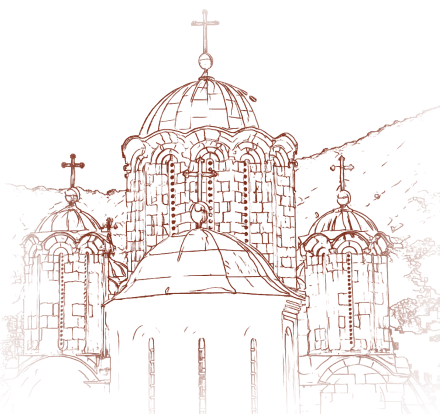
On a lofty plateau, in the heart of the gorge embraced by the hills of Maćeha / Maćija and Pastorak, a place worthy of the Despot's dream was found. The place that would later be called Manasija, in honor of his nickname, became a refuge for monks - the endowment of a great Christian ruler became a beacon of faith. Manasija Monastery became not only a symbol of his reign but also a mirror of his soul - deeply devout and enlightened. Alongside the building of the monastery church, the Despot began the construction of a grand refectory, residences, auxiliary buildings and mighty defensive walls, which would later protect Manasija Monastery and its community. According to the testimony of Constantine the Philosopher, the Despot sought out, in various lands, for his endowment, skilled and “the finest builders and experienced painters, wherever (they) were to be found,” and so beautified the monastery church with golden ornaments and floral patterns. The Despot's biographer continues: “He sent (for masters) everywhere, even to the islands. (This community) was built at many and enormous expenses, and (that) house was adorned, and the town around it - (these were) excellent dwellings for the common life” [ŽDS 52]. In the Life of Despot Stefan we further read that he gathered from all sides “very wise and exceptional monks” and settled them in his endowment. Constantine the Philosopher emphasizes that Despot Stefan also took care of the material well-being of the monastery, and he donated and gave to it “villages and vineyards throughout all his land,” which he also confirmed with his signature. Day after day the holy Despot laid up in Manasija Monastery