
Wall Paintings of the Church of the Holy Trinity
Frescoes
The wall paintings of the Manasija church are a high point of the art of the early 15th century and an important example of late Byzantine painting of the Palaiologan era. Historical sources describe them as a wonder of beauty that inspired admiration. For his endowment, as Constantine the Philosopher writes, Despot Stefan sought out “skilled painters” everywhere, and the painting was most likely completed by the consecration of the church in 1418.
The frescoes are arranged in zones, following the architecture and the purpose of each part of the church: from Christ in the dome, through the prophets, evangelists and feasts, down to saints in full figure and in medallions. The pillars, the arches, the great dome and the four small cupolas were painted as well. Of some 2,000 m² of wall painting, a little more than a third survives - in the nave of the church.
THE FRESCOES OF MANASIJA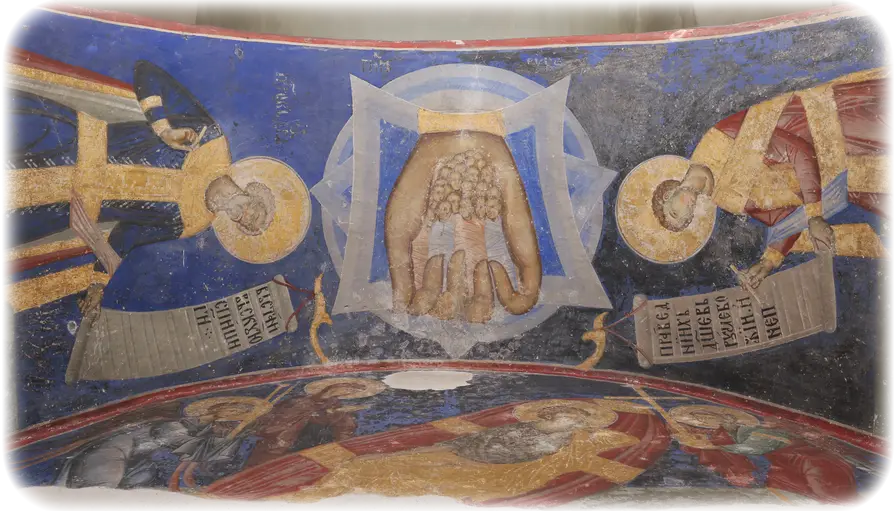
From the dome to the threshold - walls that speak
The Dome and Pendentives
Heaven Above the Nave
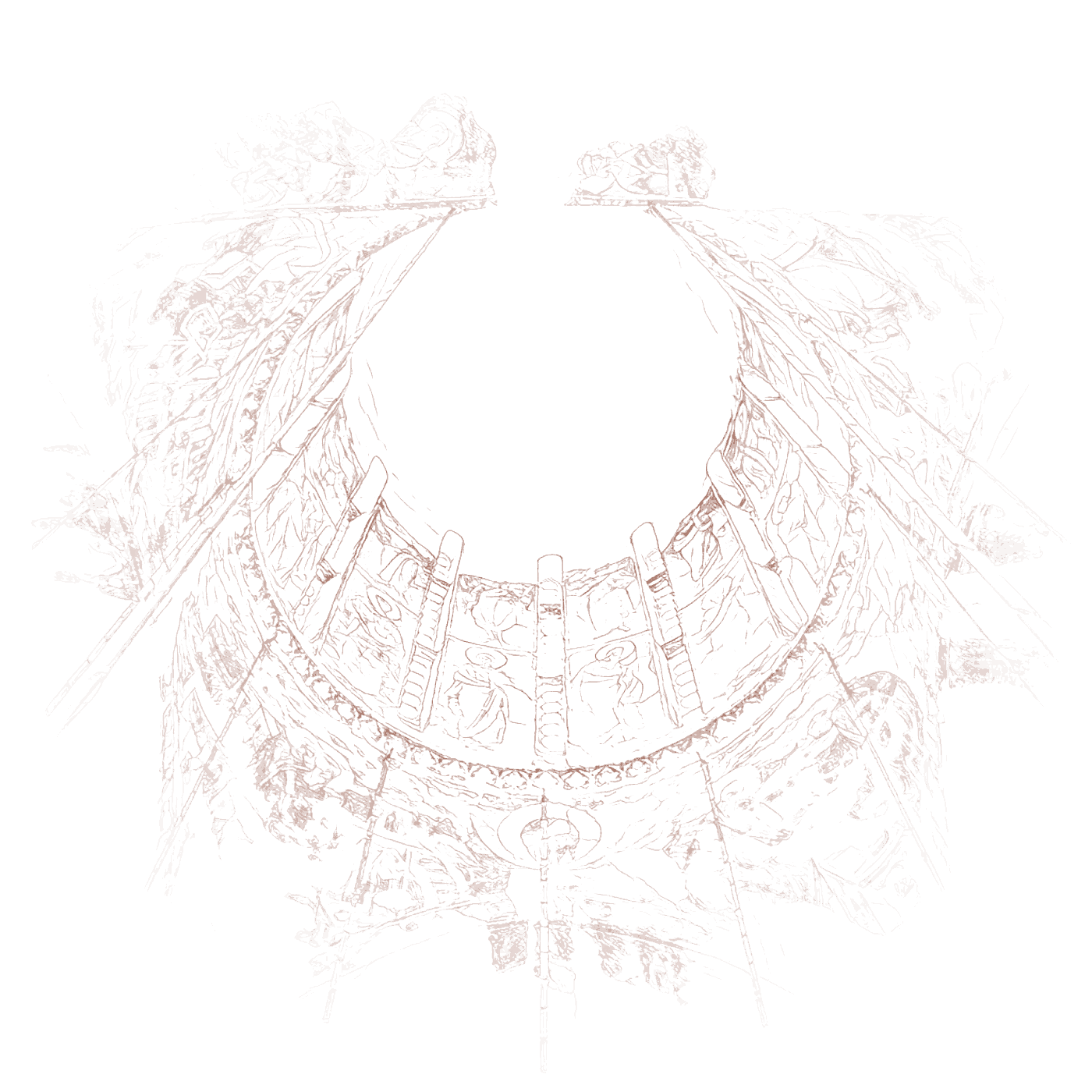
The calotte of the main dome once held a monumental bust of Christ Pantocrator and, around him in a circular band, the Heavenly Liturgy served by angels - a counterpart to the liturgy on earth. Only fragments of that composition survive.
In the twelve-sided drum, between twelve narrow windows, twenty-four Old Testament prophets and righteous men stand in two rows, holding the scrolls of their prophecies - from Elijah, Elisha and Isaiah to Moses, Aaron and John the Forerunner: those who foretold the coming of the Savior.
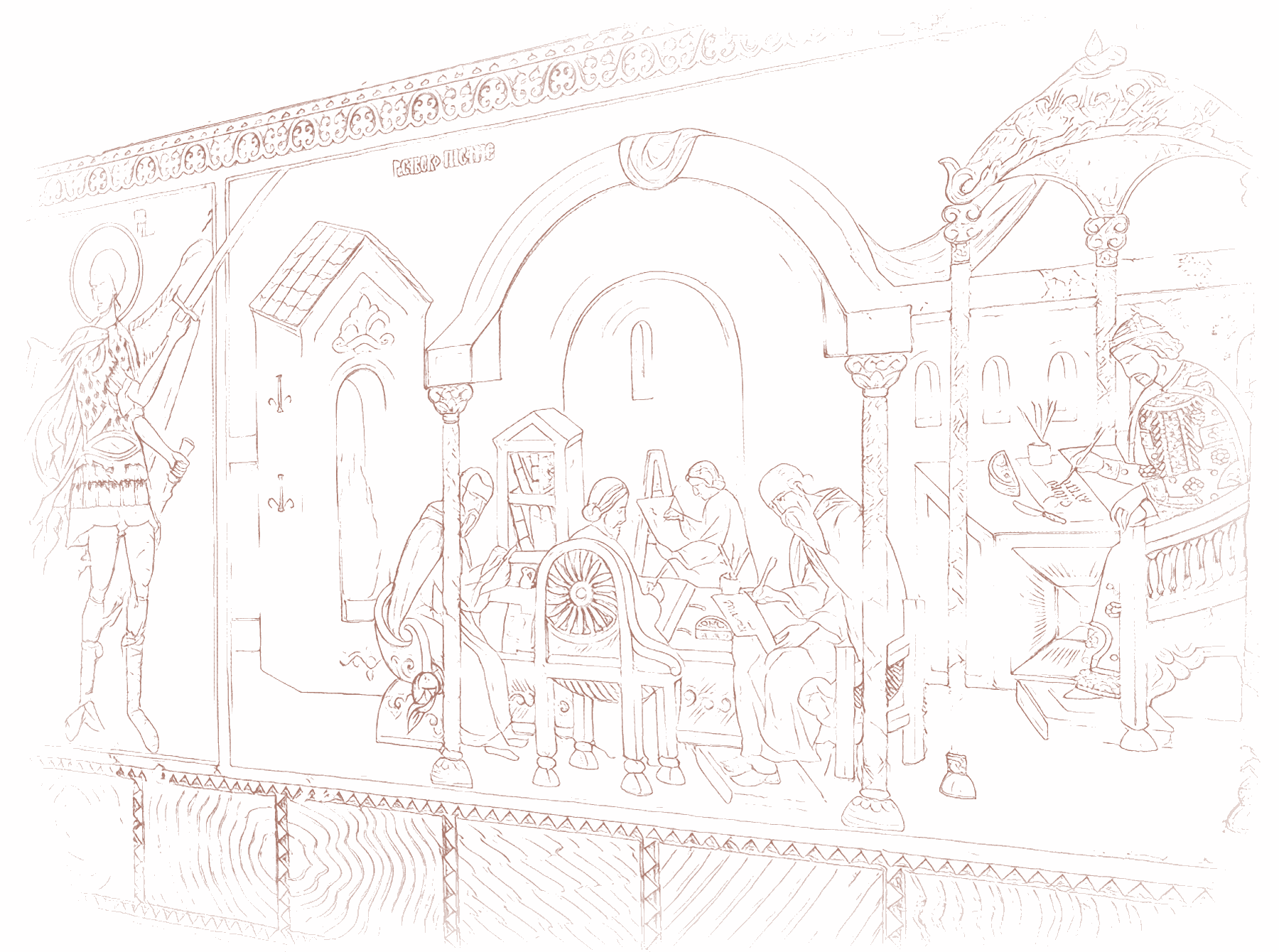
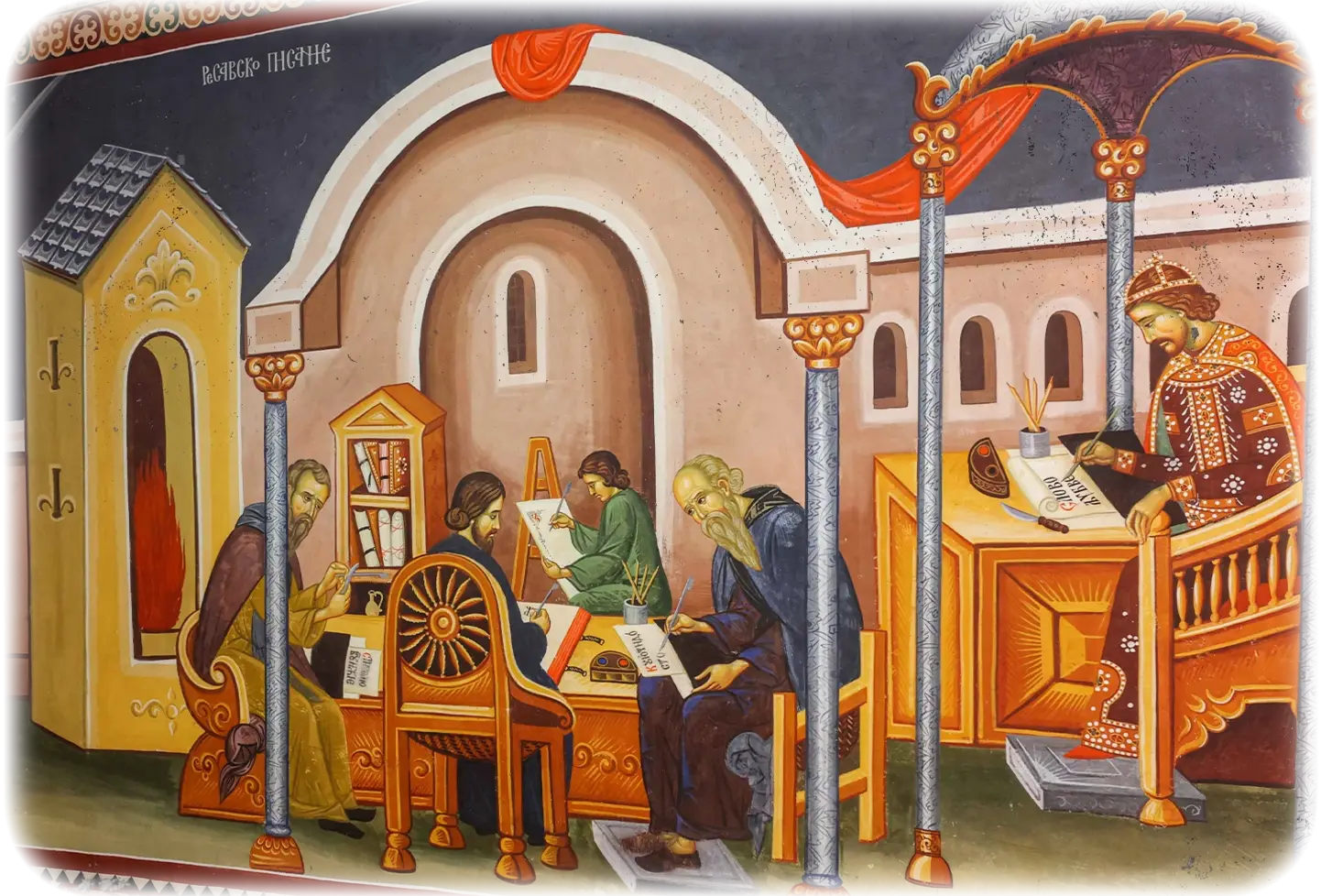
Below the dome, in the pendentives, are the evangelists - witnesses of Christ's life: John in the cave on Patmos dictates to Prochorus, Mark reads, Luke writes in a scriptorium, and Matthew composes his Gospel in a splendid terraced building. Beside them are their symbols: the eagle, the lion, the calf and the angel.
FRESCOES IN THE NAVE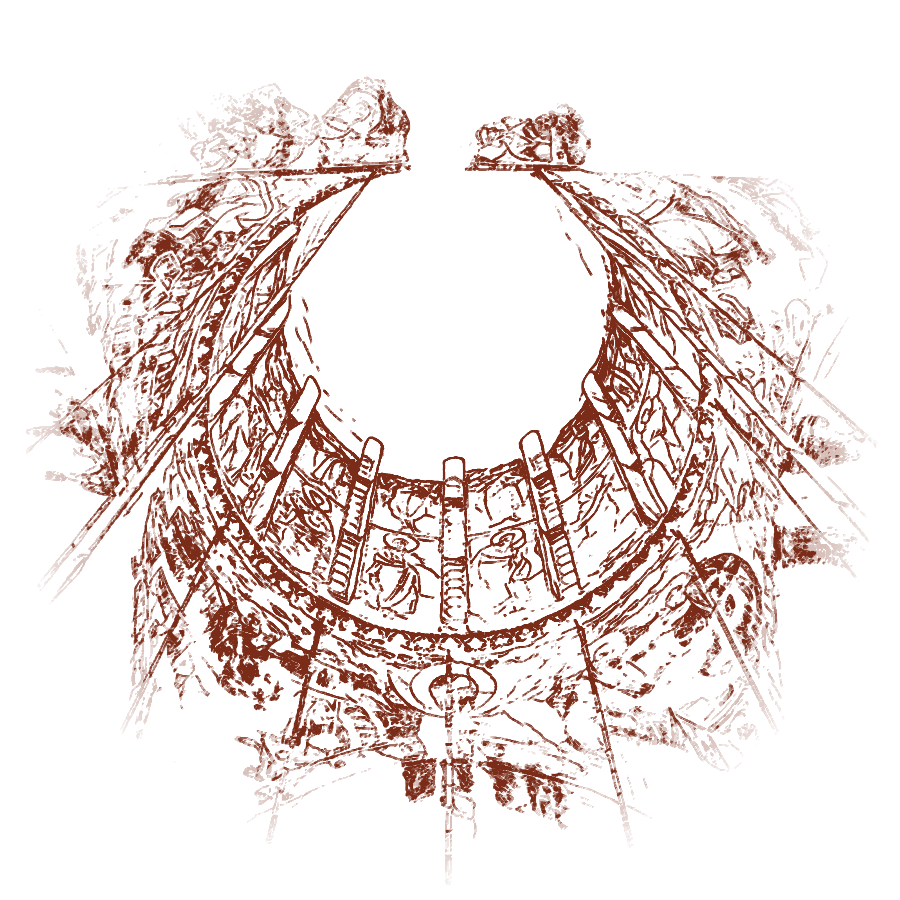
The Sanctuary
The Altar
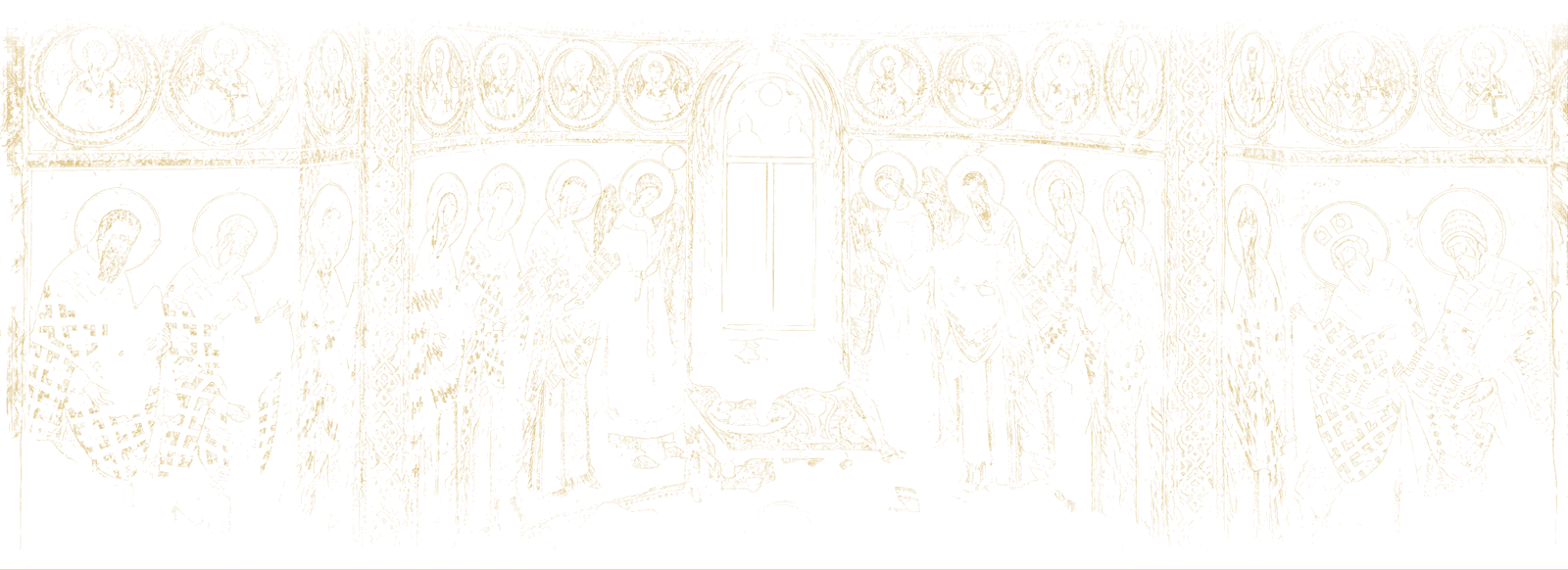
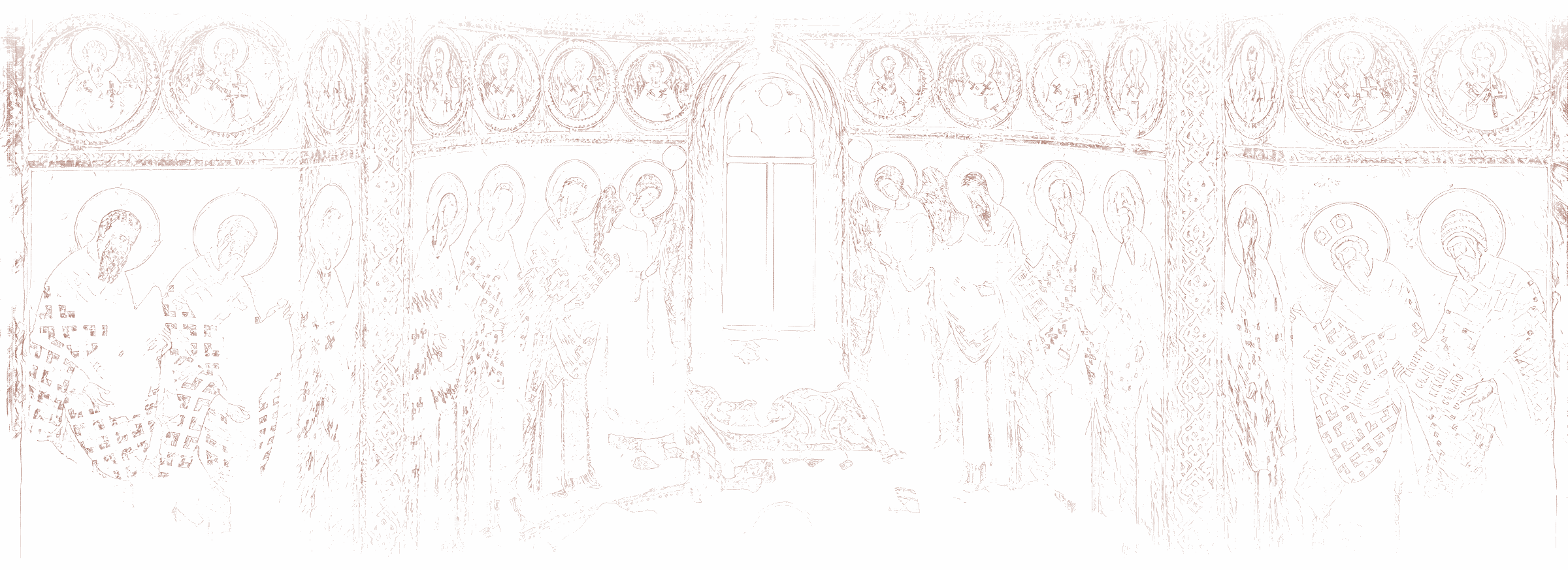
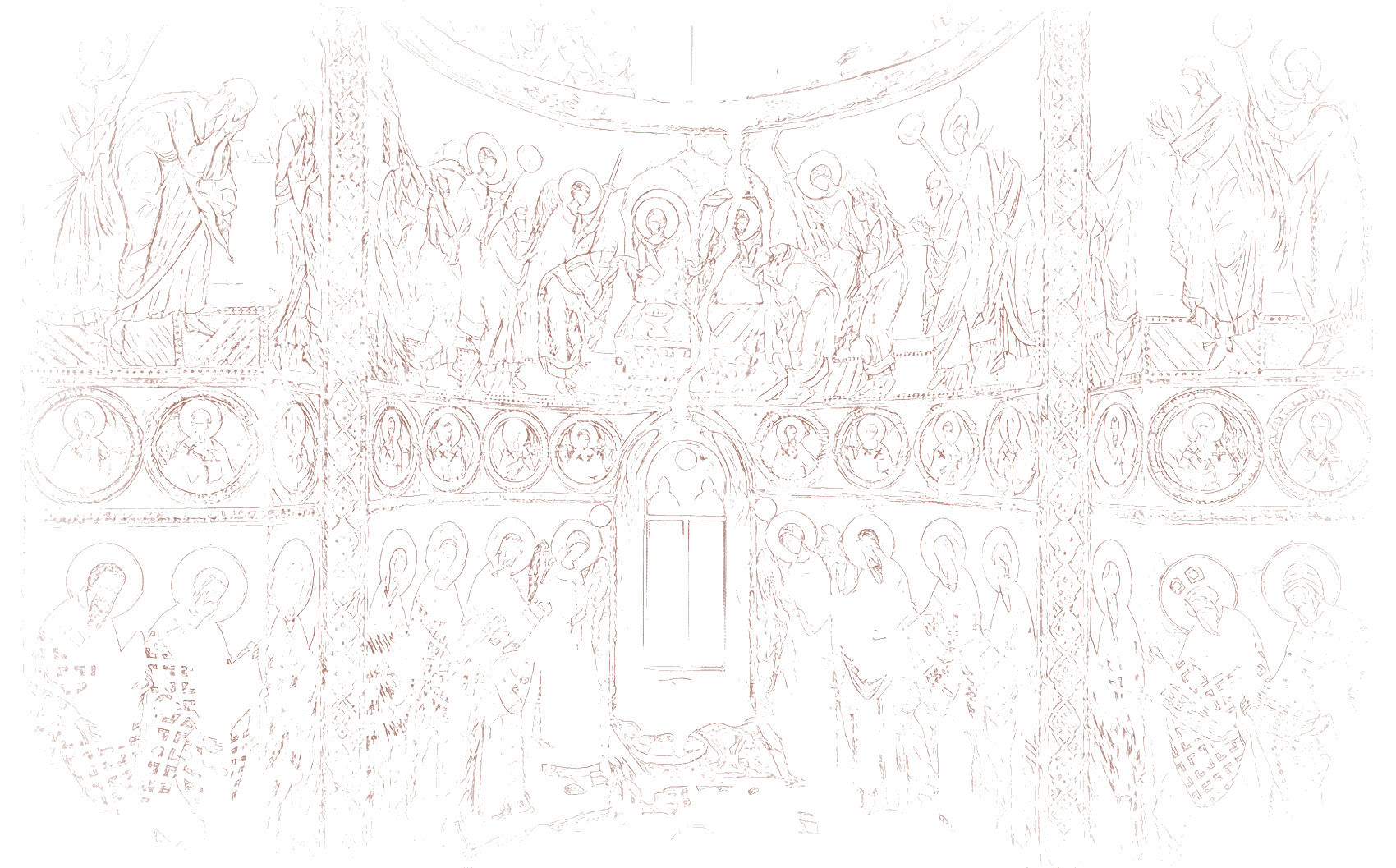
The most complete part of the surviving frescoes is in the altar. On the face of the arch was inscribed the verse “Lord, I have loved the beauty of Thy house”; in the semi-dome are the Mother of God with Christ and angels, and below them scenes of Christ’s appearances after the Resurrection: Peter at the empty tomb, Christ showing his wounds, eating honey and fish, and the miraculous draught of fishes.
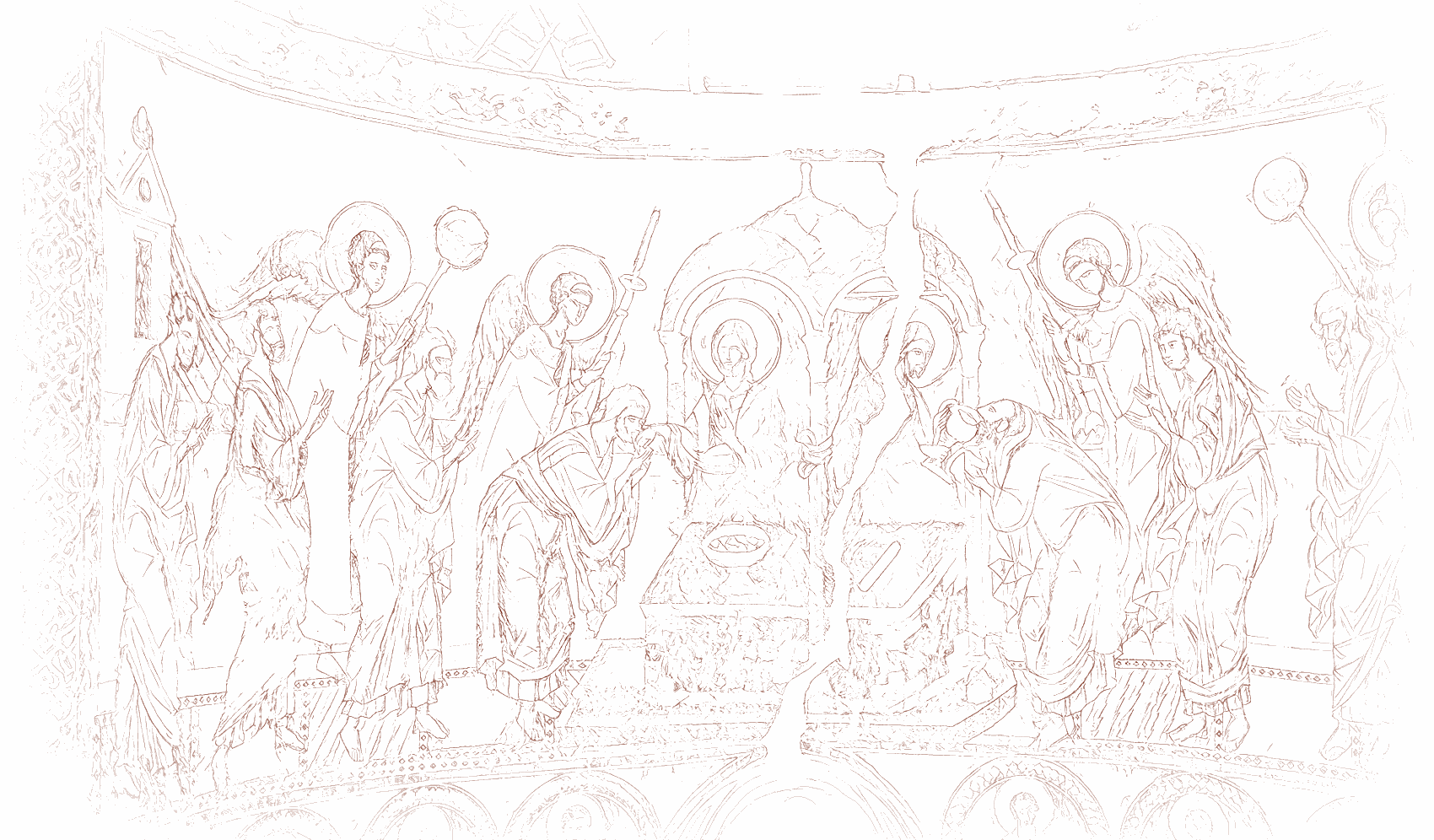
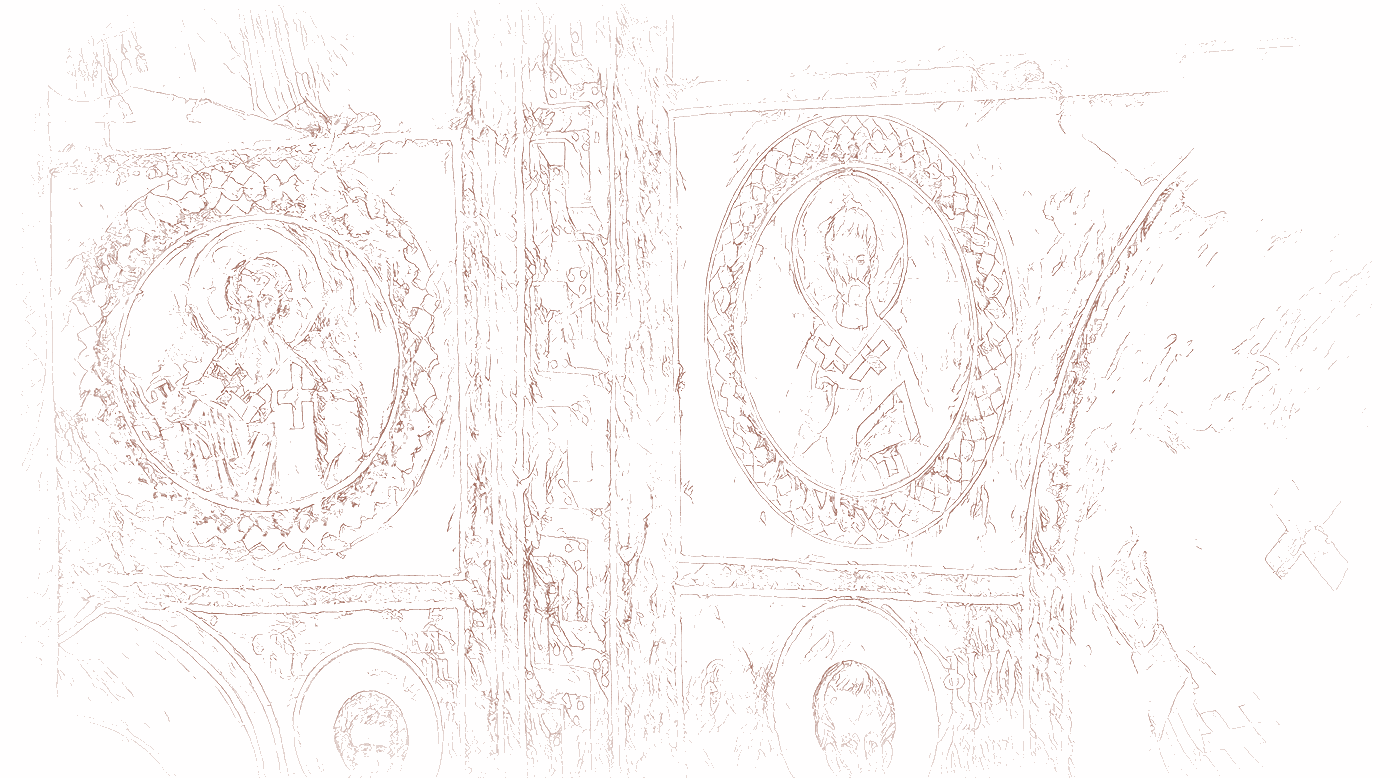
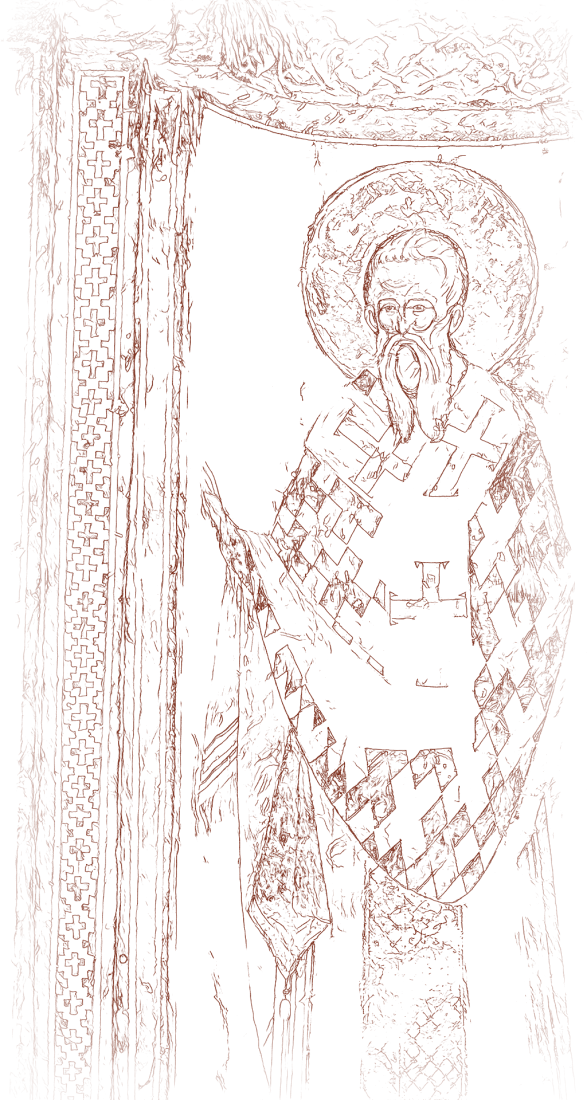
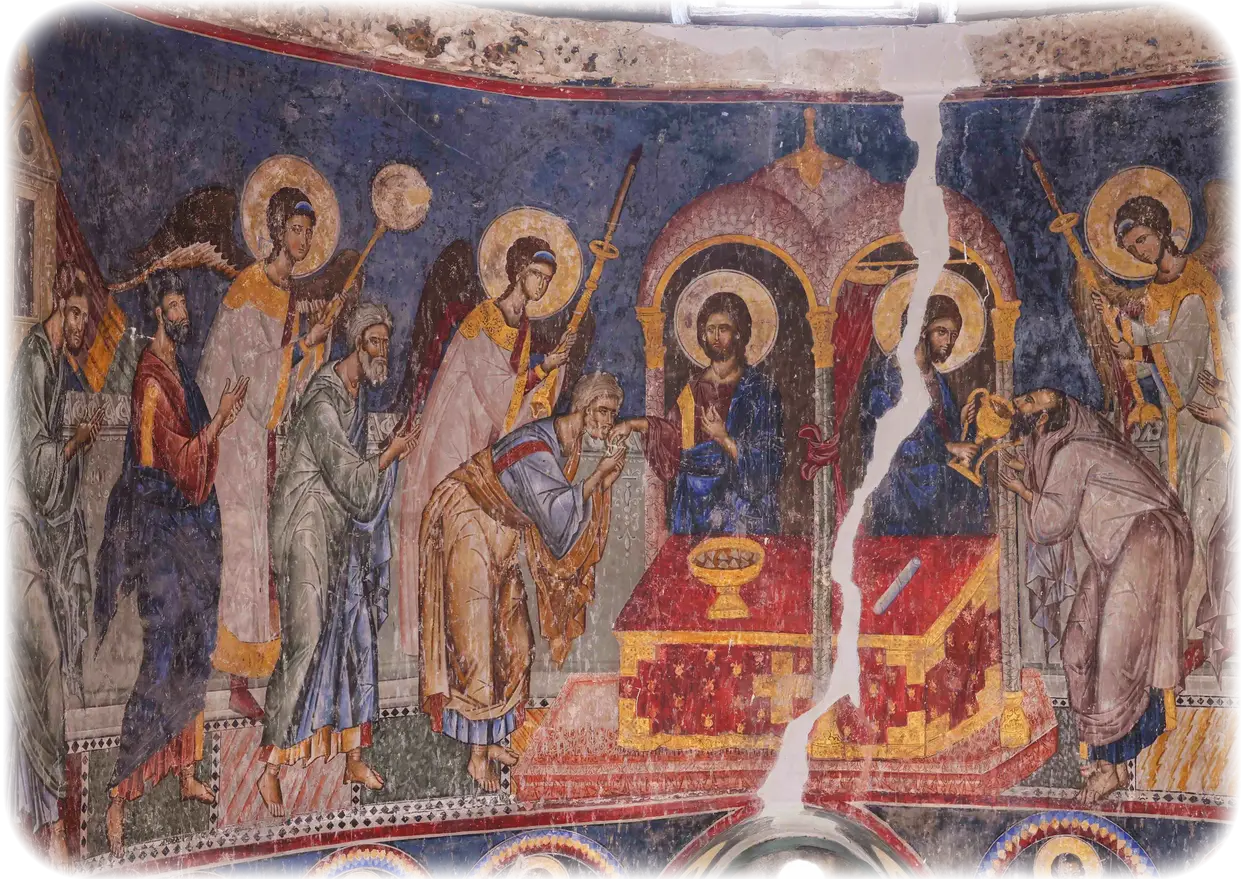
In the middle zone Christ is shown twice, beneath a ciborium: on the north side he gives the apostles Communion with bread, on the south side with wine. Below is the Divine Liturgy - fourteen holy hierarchs, among them John Chrysostom, Basil the Great and Saint Sava of Serbia, approach the altar table on which Christ lies as a child. Between the zones, in medallions, are fourteen bishops.
The altar also holds the Sacrifice of Isaac by Abraham and the Three Youths in the Babylonian Furnace, while the prothesis and the diaconicon hold holy hierarchs.
FRESCOES IN THE ALTAR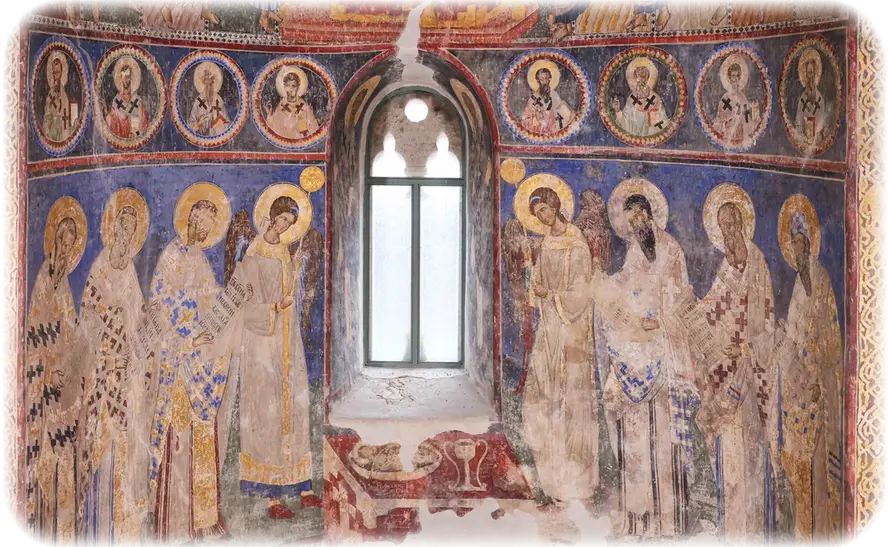
Medallions, Vine and Pillars
Saints All Around Us
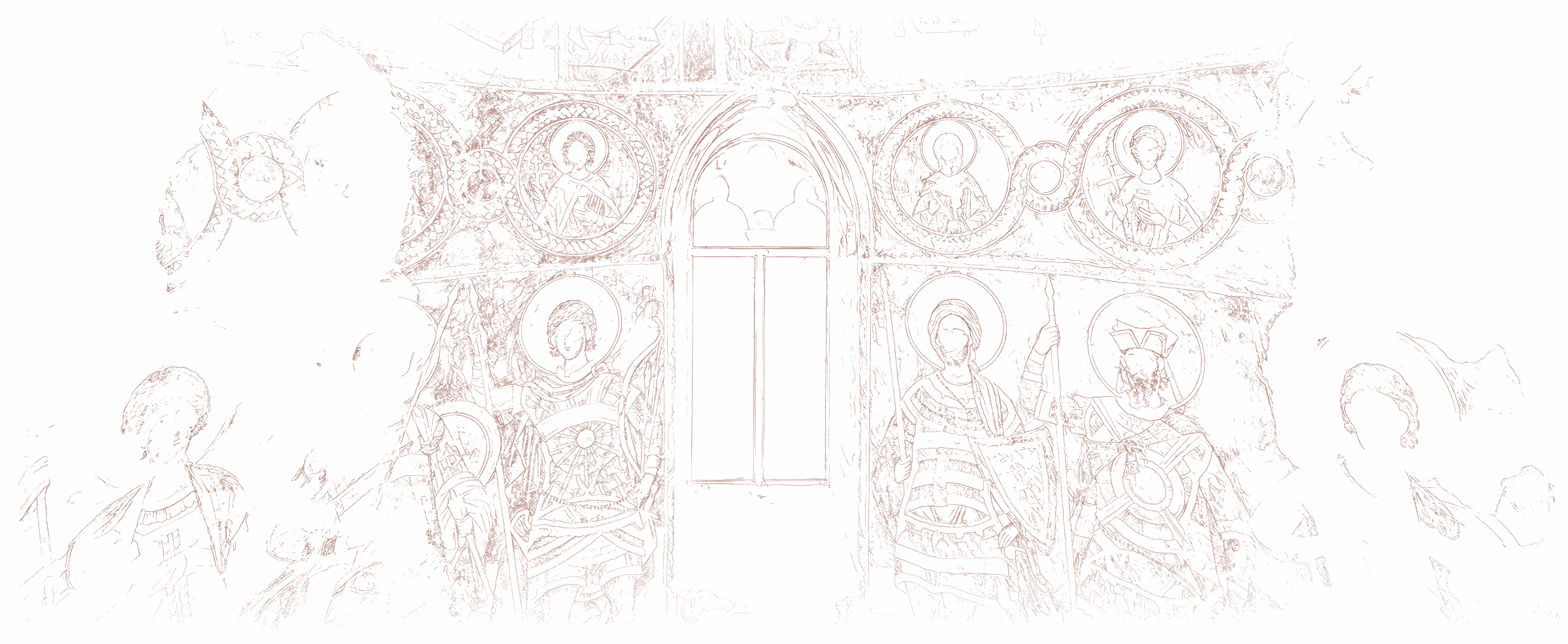
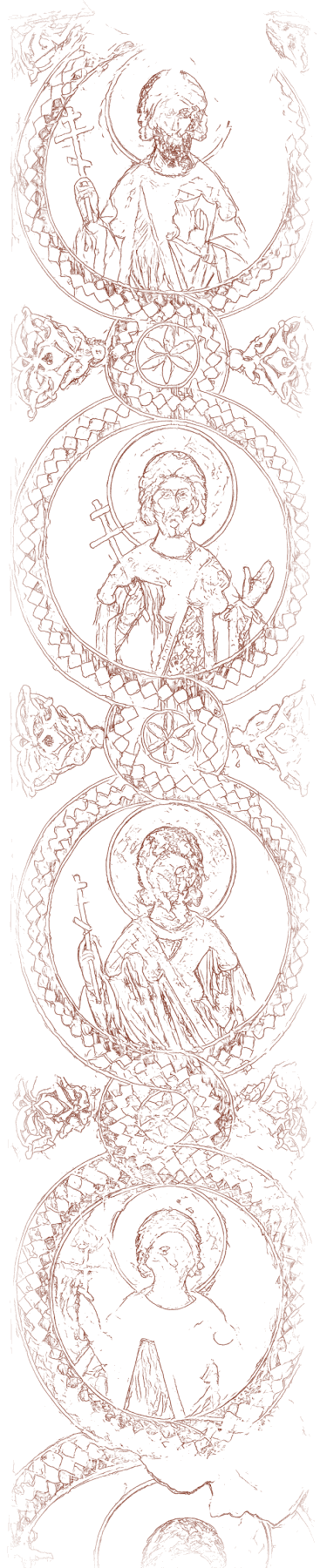
Below the narrative cycles ran rows of busts of saints in medallions, framed by bands with a zigzag row of lozenges in harmonious colors. On the narrow surfaces by the choirs a flowering vine rises, and in its cups are small busts of holy martyrs.
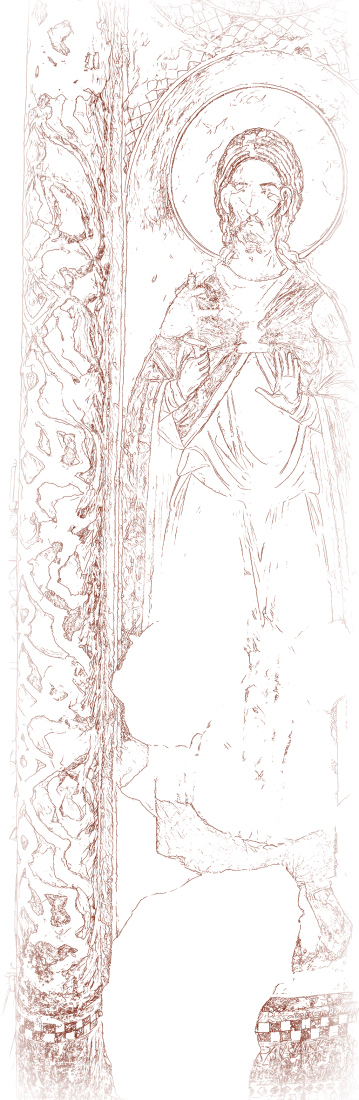
Among the saints in full figure and in medallions are warriors, stylites, ascetics and confessors; between the pendentives are the images of Christ not made by hands - the Keramion and the Mandylion. The painting does not stop at the walls: the pillars are painted too.
ORNAMENT AND SAINTS
In the choirs - an army of saints
The Choirs
The Holy Warriors
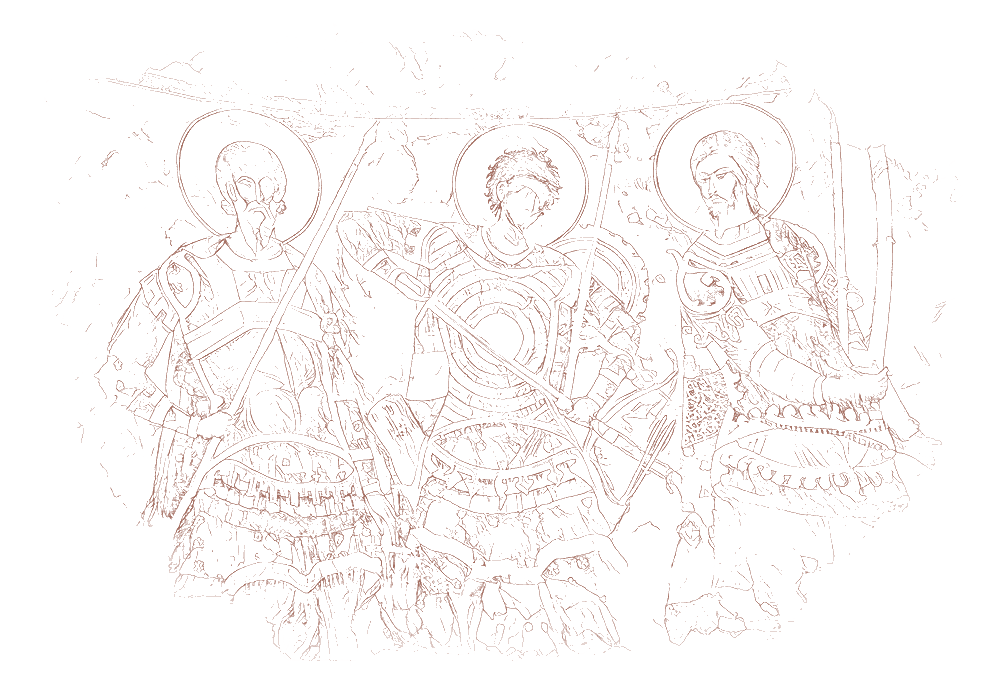
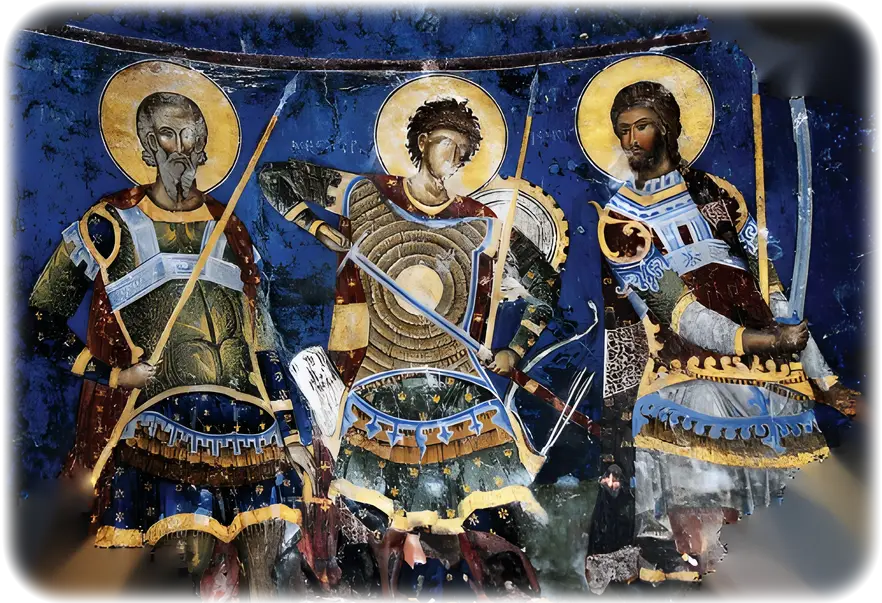
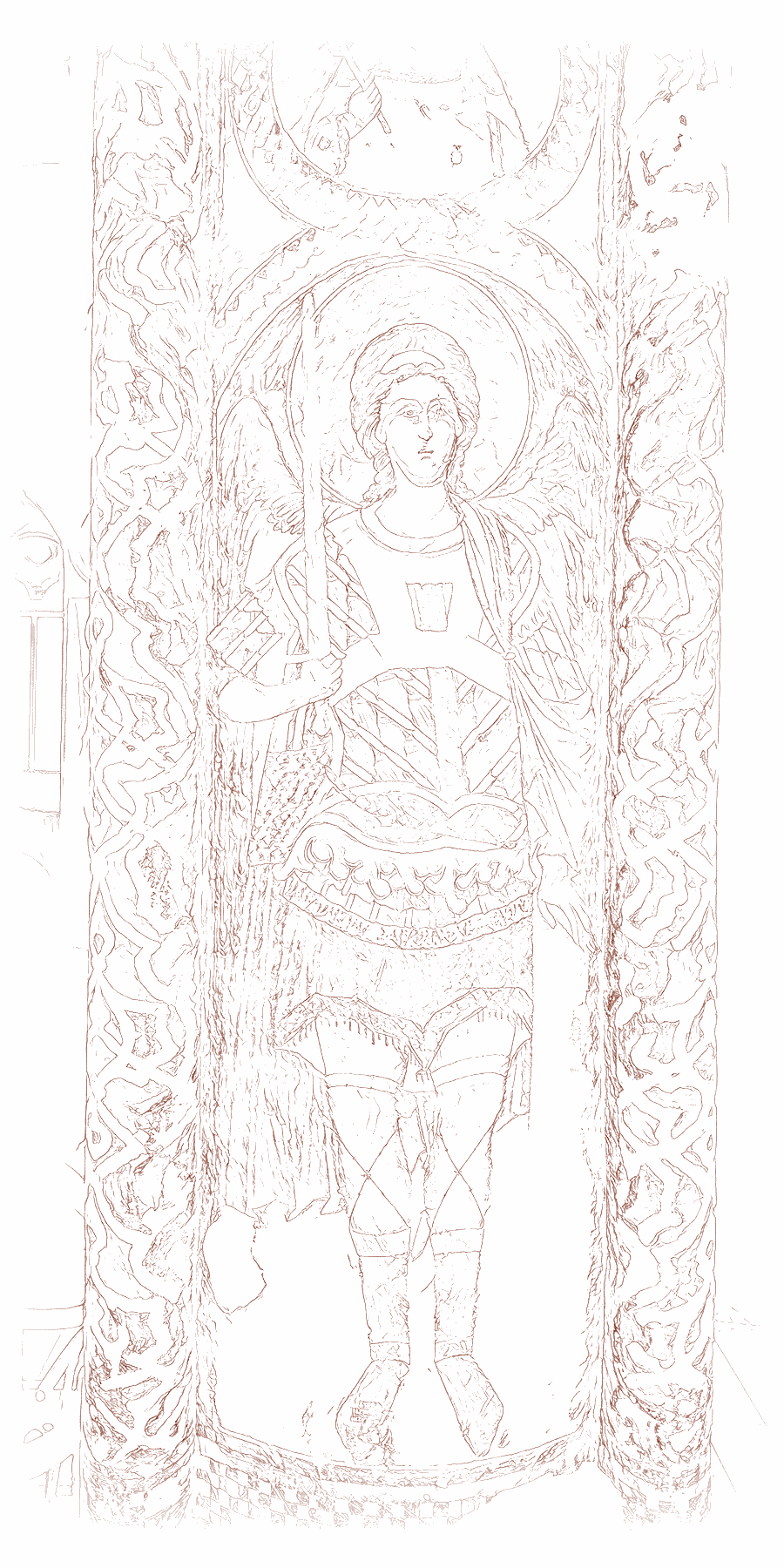
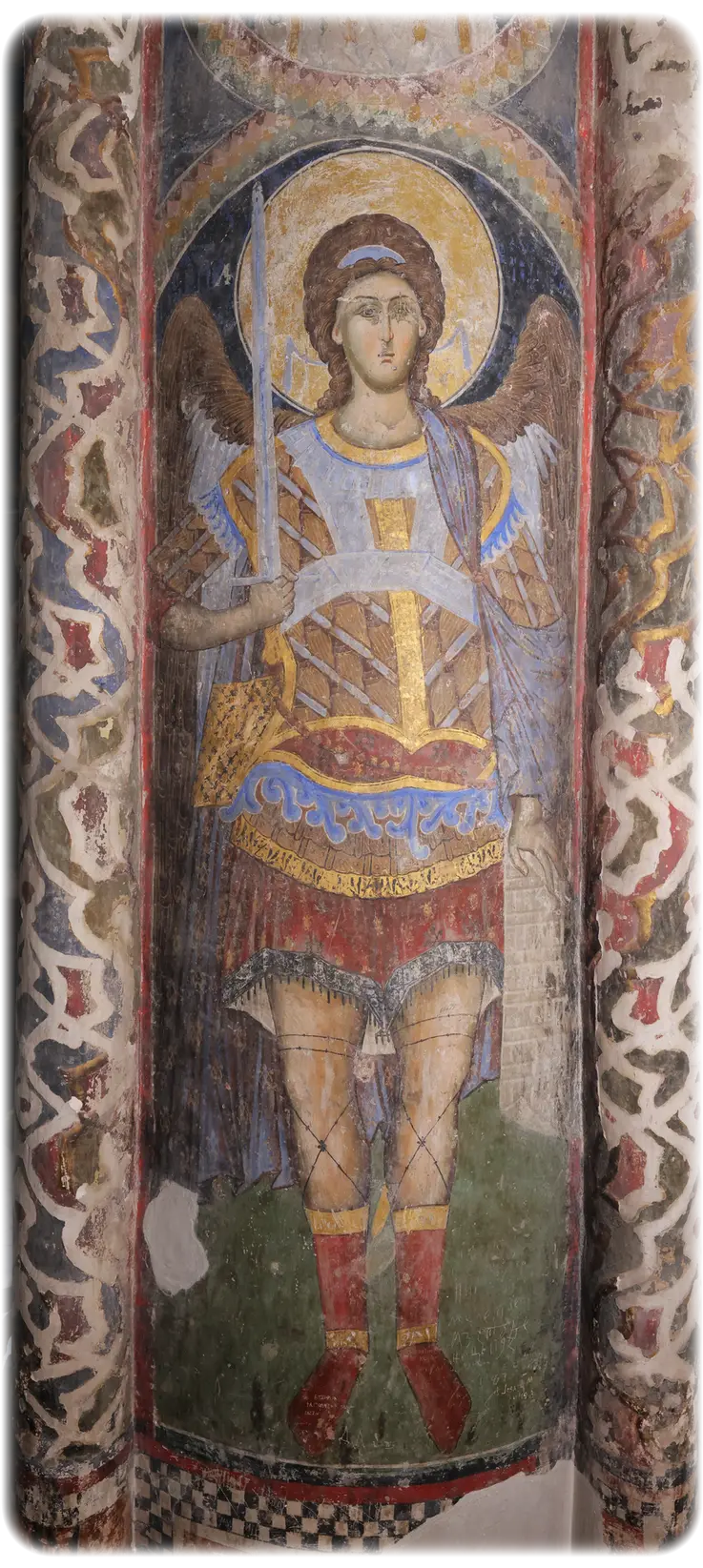
In the choirs stand the Holy Warriors - at a time of grave Ottoman threat, a reminder of the strength of faith and the hope of salvation. They are painted in splendid military gear, strong and classically proportioned: some ready for battle, others in ceremonial array, as if on parade. The details of their clothing, armor and weapons are painted with a goldsmith’s precision.
- South choir
- George, Demetrius, Procopius, Artemius, James the Persian and Eustathius
- North choir
- Theodore Tiron, Theodore Stratelates, Mercurius, Nicetas, Nestor and Arethas
Feasts, Miracles and Parables
The Gospel on the Walls
The Great Feasts were painted in the vaults below the dome - from the Annunciation, the Nativity and the Baptism to the Descent of the Holy Spirit only fragments survive, and of the Ascension on the eastern vault, part of the figure of Christ. On the north side of the nave, scenes of the Passion can still be made out. Above the saints ran Christ’s miracles, parables and teachings.
- Diaconicon
- The Wedding at Cana
- South choir
- The Twelve-Year-Old Christ in the Temple, The Publican and the Pharisee, The Prodigal Son
- North choir
- The Marriage of the King's Son, The Rich Man and Lazarus, The Good Samaritan
- West wall
- The Multiplication of the Loaves
- North wall
- The Healing of the Man with Dropsy
- Prothesis
- The Healing of the Canaanite Woman's Daughter
West Wall of the Nave
The Founder's Fresco
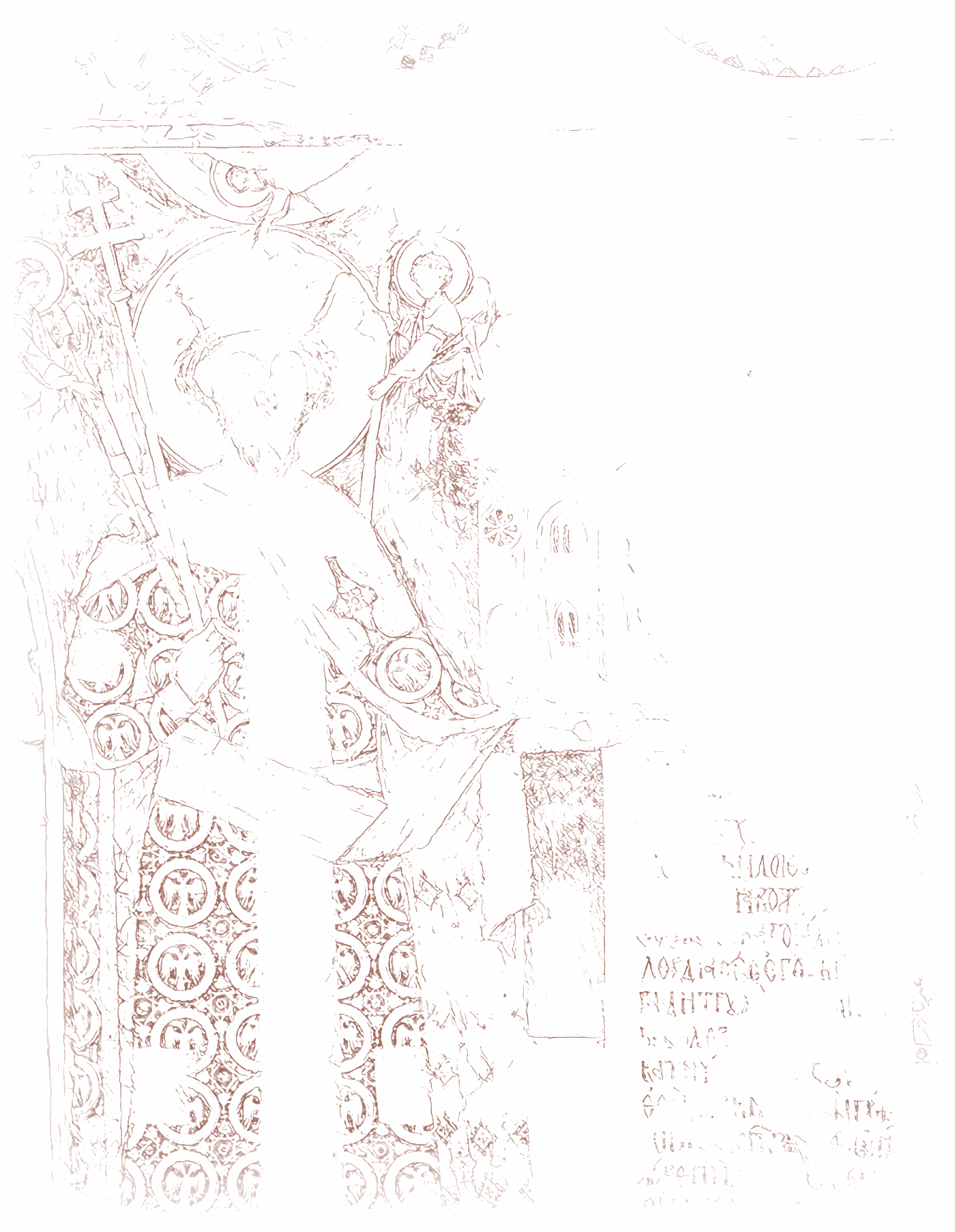
On the north side of the main entrance is painted Saint Despot Stefan - dignified, with short hair and beard and an elongated face, in a purple cloak with golden double-headed eagles, holding a scepter in his right hand and a model of the church in his left. From heaven Christ lowers a crown upon him, while angels bring him a sword and a spear.
On a scroll the despot humbly asks the Holy Trinity to accept his “small offering” and grant him salvation. He turns toward the three angels who appeared to Abraham: they receive the model of the church and bless the founder. The fresco presents the church as the place where the earthly and the heavenly meet.
On the same wall is the Dormition of the Most Holy Mother of God: she lies on a bier surrounded by candles, while Christ holds her soul in the form of a child, and the apostles and hierarchs mourn her.
THE FOUNDER'S FRESCO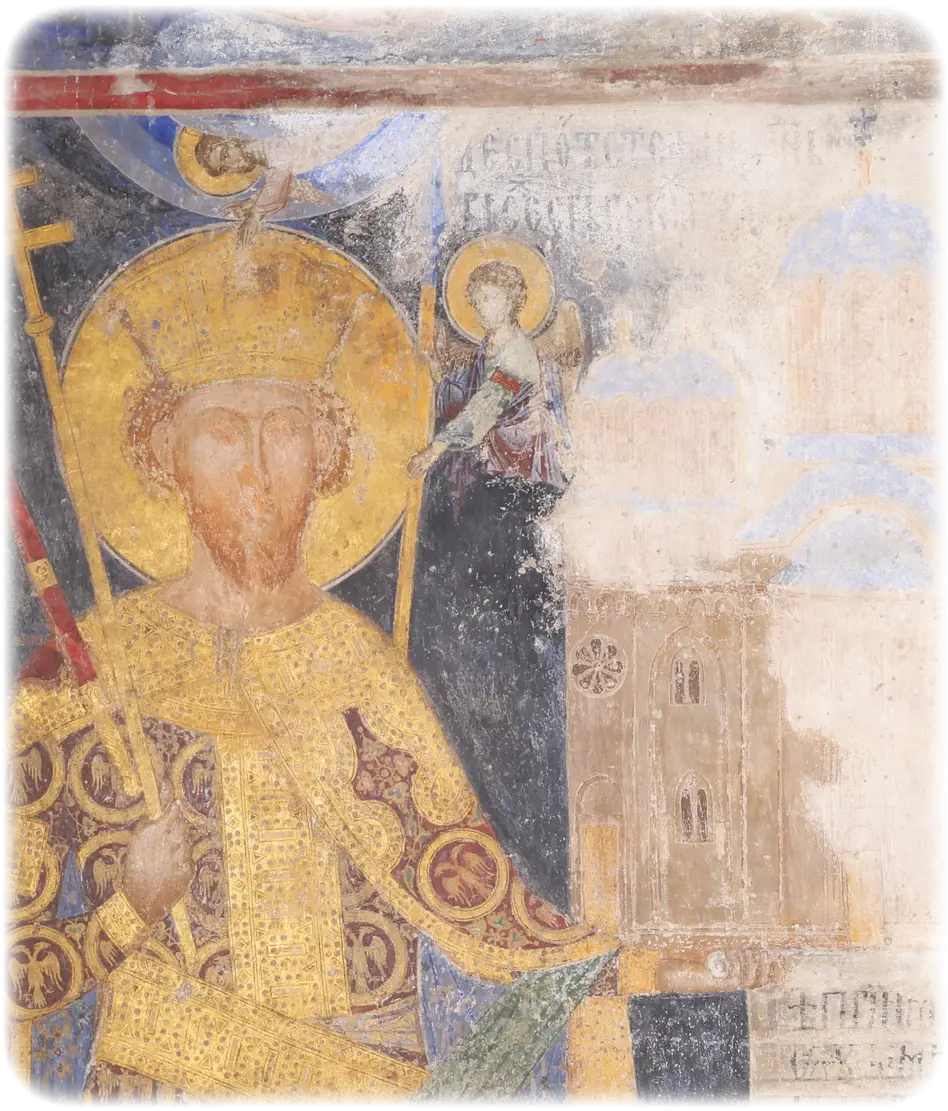
Above the Entrance to the Nave
The Unsleeping Eye
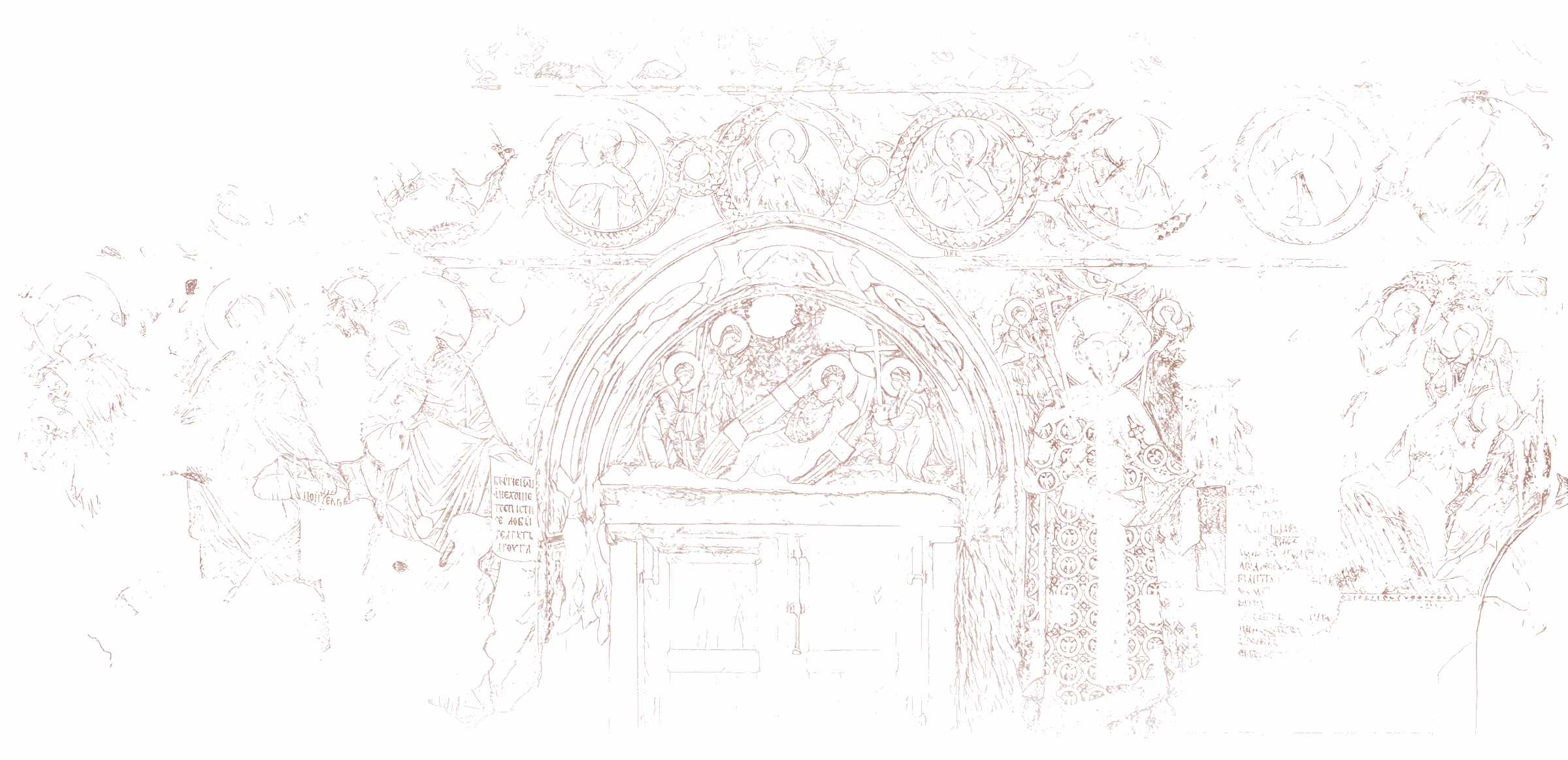
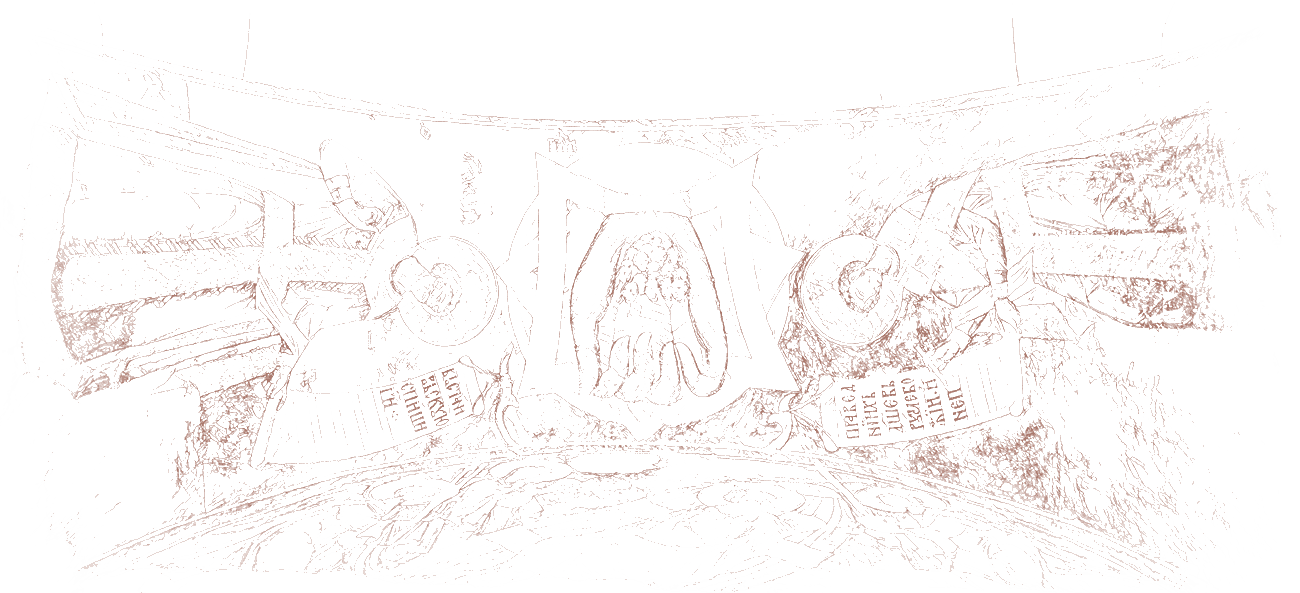
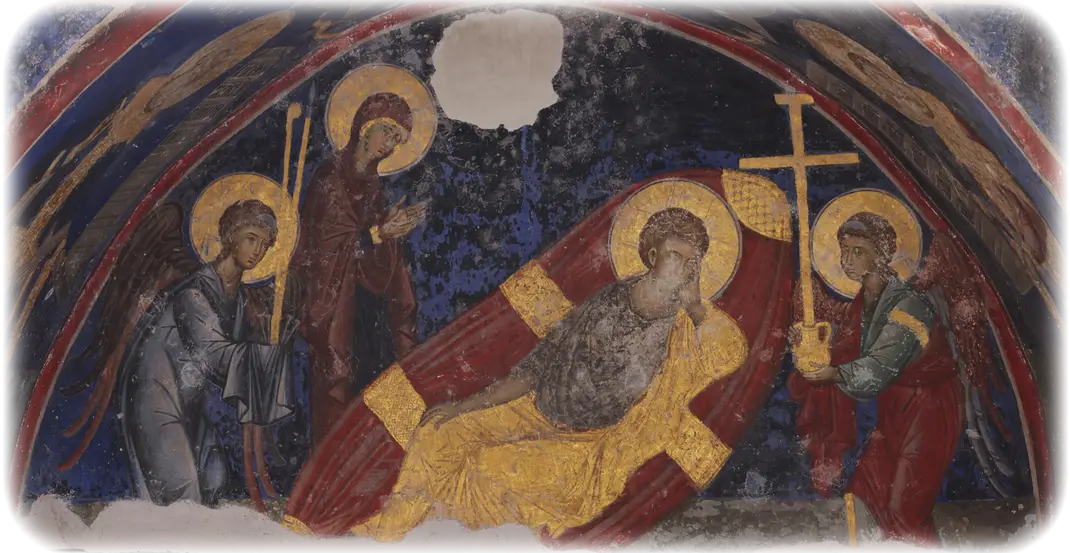
Above the very threshold, in the lunette, the young Christ Emmanuel reclines on his elbow on a mattress, while two angels bring him the sponge, the spear and the cross - the instruments of his coming Passion and glory. The Mother of God stands beside him and, full of a mother’s sorrow, spreads her hands in prayer.
In the vault above is the Hand of God within a threefold circle of light, holding the souls of the righteous. Below it are the kings and prophets David and Solomon, their scrolls turned toward Christ. Right above the entrance, the image becomes a signpost to salvation for everyone who steps into the church.
THE UNSLEEPING EYE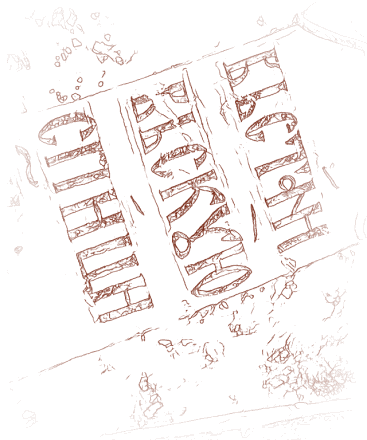
What the gunpowder destroyed, the painters restored
The Narthex
Lost and Restored
The frescoes of the narthex were lost in a gunpowder explosion in the early 18th century. Only faded traces remain: a vine scroll with gold leaves above the entrance to the nave, part of a scene of the Ecumenical Councils, and the Mother of God with Christ in the tympanum of the north door, in deep azure and gleaming gold.
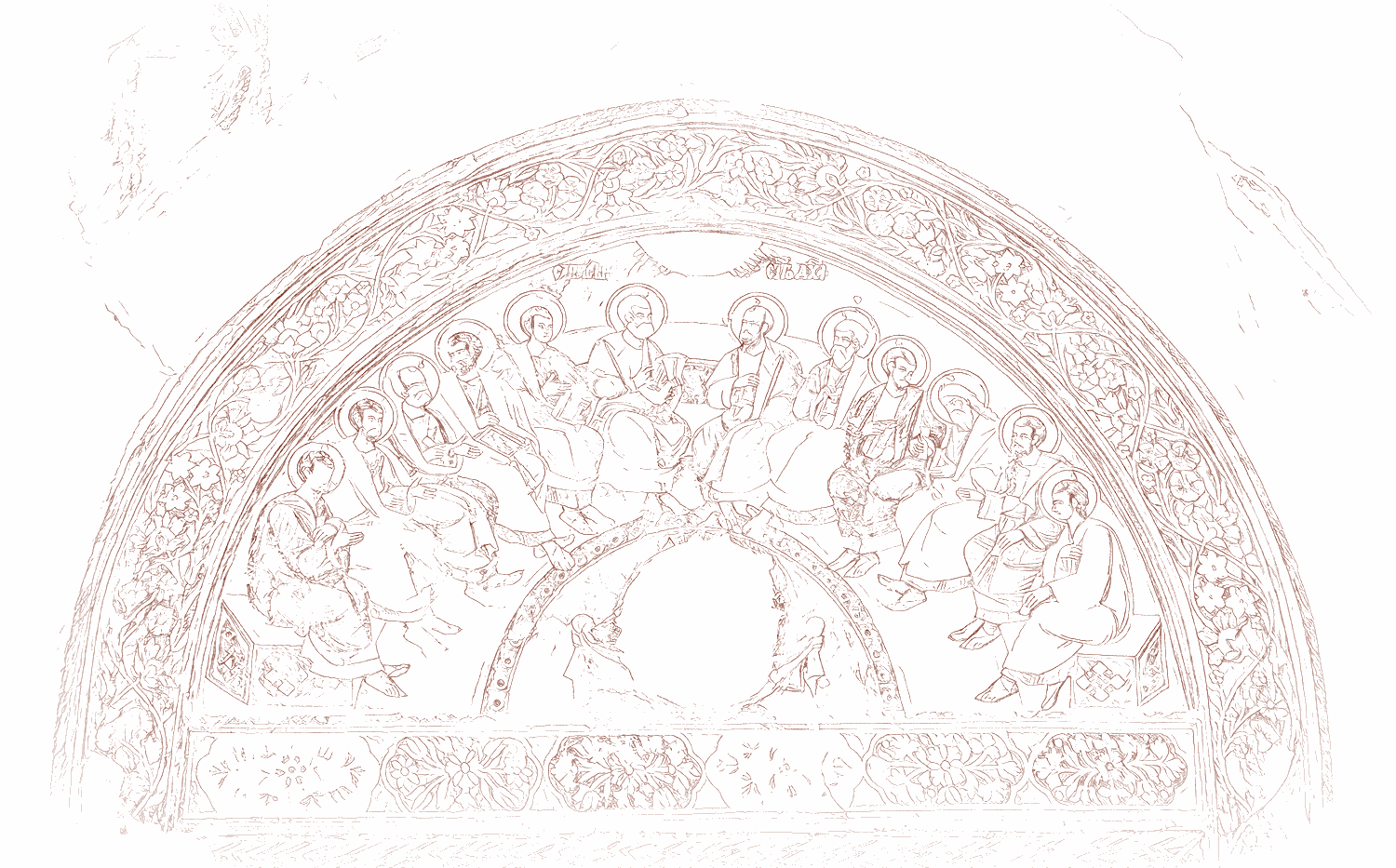
The restoration was completed in 1735 by a company of painters from Bitola, by all accounts followers of David of Selenica, who had earlier painted Vojlovica and Drača. In the lunette above the main entrance to the nave they painted the Descent of the Holy Spirit upon the Apostles in light, warm ochre tones, and above the north entrance the Mother of God with Christ, with rich floral ornament.
FRESCOES OF THE NARTHEX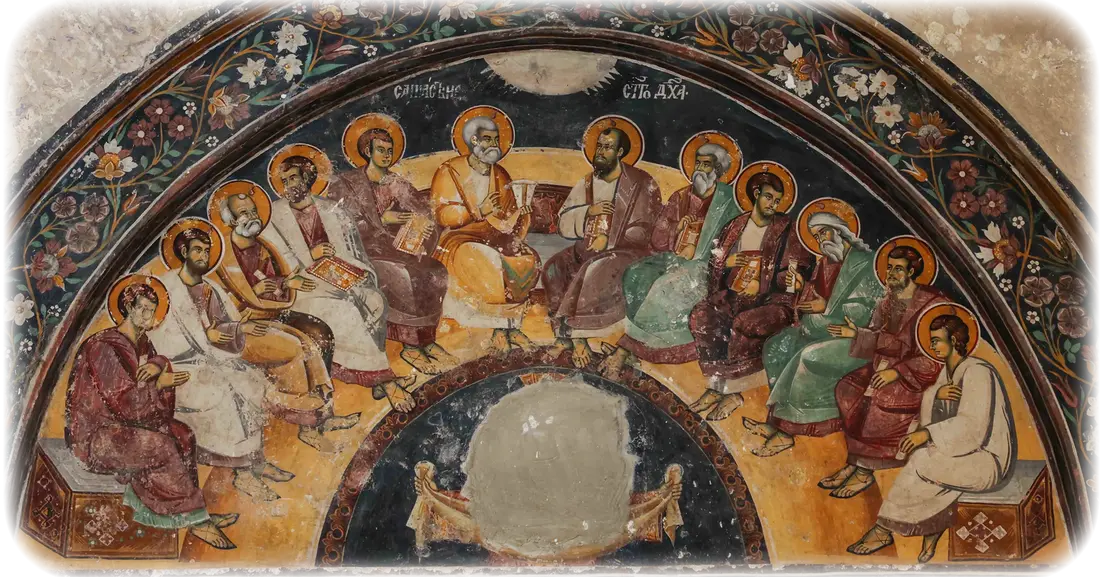
The Altar Screen
The Iconostasis
The original iconostasis has not survived. Under Ottoman rule the monastery served as a military compound, and the church as a stable, a storehouse and an outbuilding - it is a true miracle that Manasija endured and survived.
18th c.
A very simple iconostasis; some of its icons were saved during the migrations and are now at Bođani Monastery.
19th c.
The monk Joanikije cleans the church and restores worship; Abbot Sava Popović puts up a new iconostasis, which did not last long because of the leaking roof.
1863-1864
A large wooden iconostasis by Milija and Nikola Marković, paid for with a thousand ducats - its icons are now in the narthex.
2006/7
A simple stone iconostasis befitting a church of the early 15th century, with icons by Veronika Đukanović.
Style and Masters
Resava Writing
The Resava frescoes are closely related to the paintings in the narthex of the Church of the Holy Prophet Elijah in Thessaloniki and in the parekklesion of Saints Cosmas and Damian at Vatopedi, so the painters are believed to have come from Thessaloniki, trained in the finest tradition of Byzantine art. They stand out for their sumptuous color, the elegance of their figures and their powerful spiritual message.
The frescoes reflect the ties of the Serbian Despotate with the Byzantine heritage, but also with the Adriatic coast and the West. The precisely dressed stone walls built by masons from the coast were an ideal ground for them - architecture and painting merge into a single whole.
“The pavement of the church of Prizren and the church of Dečani, the narthex of Peć, the gold of Banjska and the writing of Resava are found nowhere else.”
Some take “the writing of Resava” to mean the manuscripts of the Resava School - the debate over its meaning has not yet been settled.
READ THE FULL TEXTGallery
Photographs of the frescoes of the Church of the Holy Trinity - the Holy Warriors, medallions with images of saints, pillars and scenes beneath the vaults. Images open full screen.
101 photographs in the “Frescoes” collection