

At the same time, this exalted image is also a reminder of the pious aspiration of the founder himself - his gift to God, offered as a pledge for the salvation of his own soul. These images, rich in deep eschatological meaning, pervade the souls of the faithful, reminding them of the boundless grace of God, of His majestic justice, of faith in the resurrection and of hope for eternal life in the Kingdom to come.
The Painting in the Narthex of the Church of the Holy Trinity at Manasija
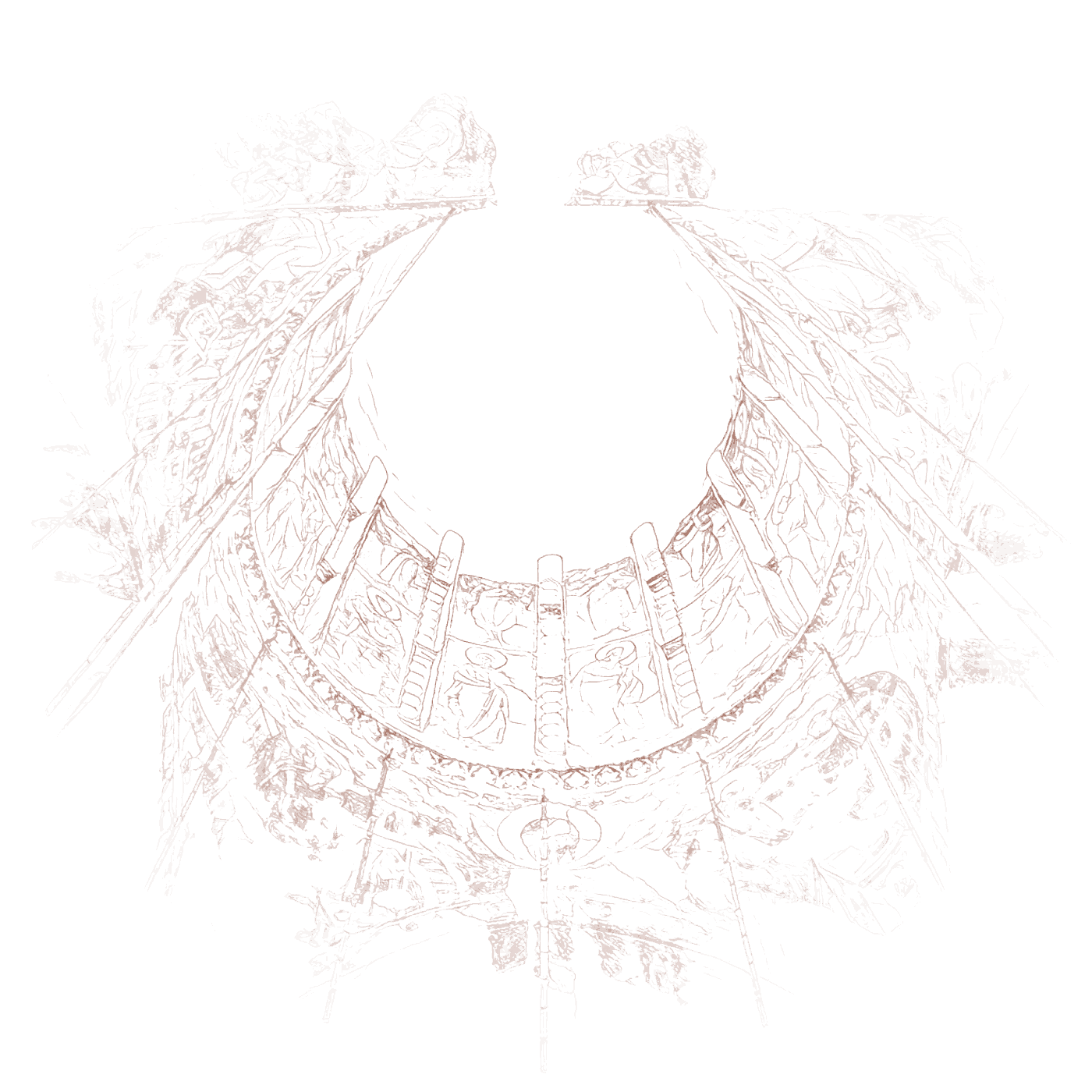
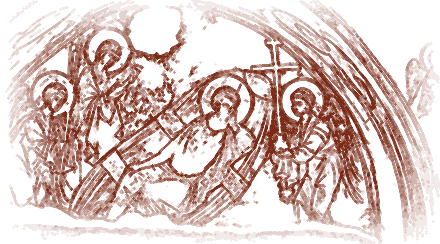
The painting of the narthex was most probably completed by the consecration of the church in 1418. Unfortunately, during the suffering-filled history of Manasija Monastery, the narthex suffered great damage in a gunpowder explosion, and the frescoes of the narthex were lost. However, the faded and damaged remains of the painting make it possible to discern, at least partly, some of the cycles of the original program. Above the lunette of the main entrance into the nave, traces of the old decoration can be made out - the motif of a floral vine, enriched with colors and gold leaf, which reflects the same sumptuousness as is present in the ornaments on the cornices of the walls and on the colonnettes in the nave. Above the archivolt fragments of frescoes have survived, while on the south wall of the narthex, west of the southern door, part of one of the scenes of the Ecumenical Councils has survived. Particular attention is drawn by the representation of the Most Holy Theotokos with Christ, painted in the tympanum of the door on the north side of the narthex. Though severely damaged, this composition has retained a fragment of its original beauty - an elegant line, refinement of proportion and a harmonious coloring that unites deep azure and brilliant gold. The palette of these colors reflects the mastery of the same hands that also painted the nave. The restoration of the narthex, after the tragedy caused by the explosion, was completed in 1735. At that time painters from the master workshops of Bitola brought the lunettes on the east wall of the narthex, above the entrances from the narthex into the nave, back to life. In the lunette above the main entrance the composition of the Descent of the Holy Spirit upon the Apostles (Acts 2:1–4) was painted. The fresco shows the twelve apostles seated on a semicircular bench, deeply immersed in the spiritual atmosphere of the event. Above them descend rays of grace - the tongues of fire of the Holy Spirit in the form of bands of light that emphasize the importance of the moment of the descent. The composition is balanced and executed in light, translucent tones that dominate the scene. The predominant ocher tones contribute to the warmth and monumentality of the depiction, and at the same time create harmony with the entire decorative system of the church. The figures of the apostles, with expressions of deep prayerful devotion and exaltation, are rendered with precise lines, emphasizing their spiritual strength and their union with the divine moment. In the lunette above the northern entrance is depicted the Most Holy