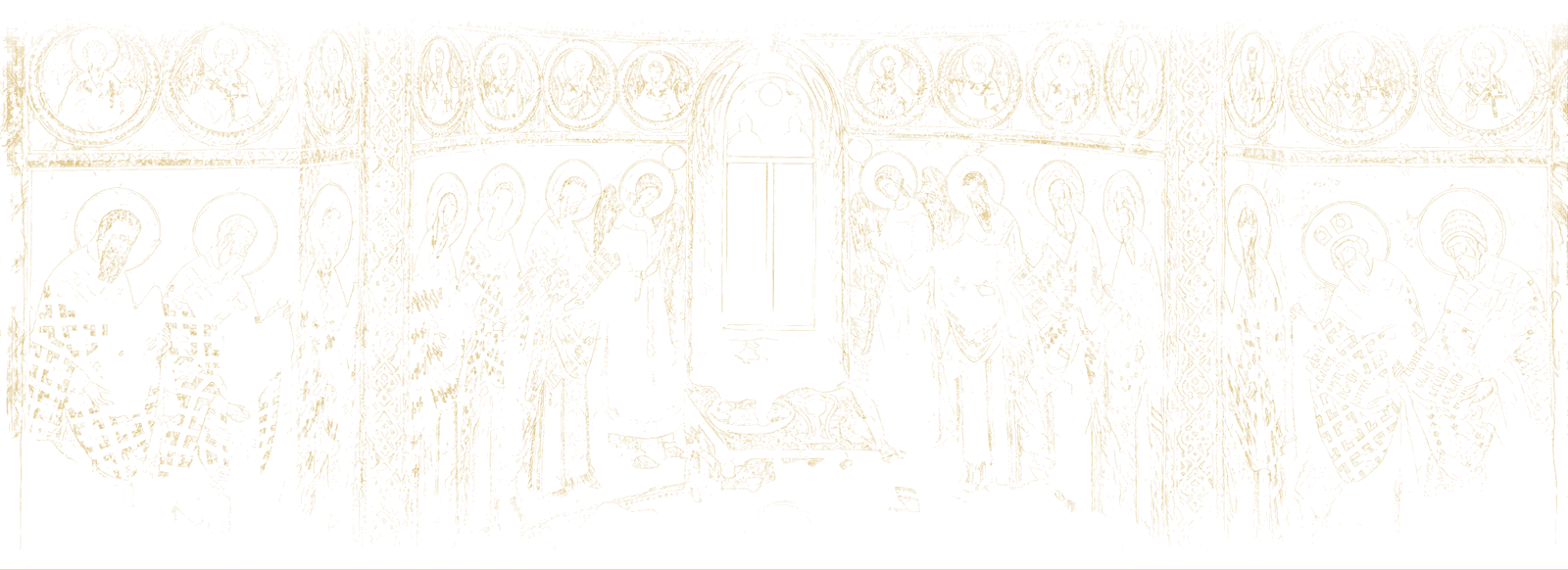
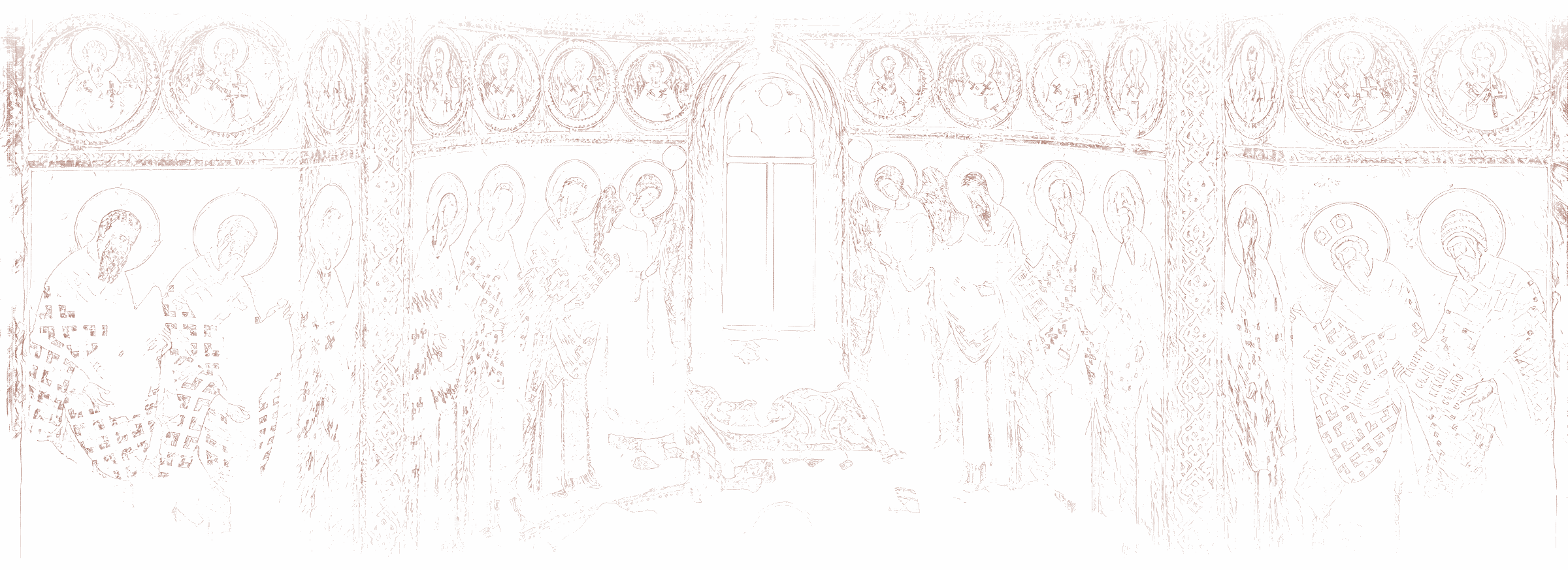
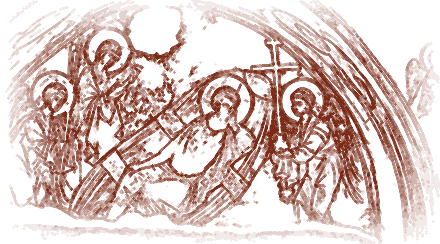
choir are Saint Theodore the Recruit (Tyron), Saint Theodore the General (Stratelates), Saint Mercurius, Saint Nicetas, Saint Nestor and Saint Arethas. The holy warriors are depicted in sumptuous military equipment, with powerful, classically proportioned figures that emphasize their authority and resolve. Some of them stand in readiness for battle, while others appear solemn, like participants in elite parades. The details of the clothing, armor and weapons are painted with exceptional care, recalling the precision of goldsmiths' ornaments. This level of mastery points to the high quality of the artistic tradition in the Serbian Despotate, that is, in the period of the reign of Despot Stefan Lazarević. Below the narrative cycles of frescoes, busts of saints are placed in medallions framed by ornamental bands with a zigzag series of lozenges in harmonious colors. On the narrow wall surfaces beside the lateral choirs rises a vertical floral vine, in whose calyxes are painted small busts of holy martyrs, which adds to the sumptuousness and visual liveliness of the decoration... Every scene and decorative element in the church of Manasija Monastery carries a deep symbolic meaning, at the same time glorifying the spirituality and the mastery of the artists who, through this painting, left a trace of eternal beauty and spiritual sublimity. The dimensions of the church of Manasija made possible a very rich fresco program. Besides the wall surfaces, the piers, the arches, the great dome and the four small cupolas were also painted... In the scenes of biblical events important personages are represented, as well as the key events of Old Testament and New Testament history, the principal moments of the economy of salvation; in the scenes based on the traditions preserved in the Protoevangelium of James and in apocryphal literature, scenes from the life of the Most Holy Theotokos are represented; in the figures of saints and in the medallions with portraits of saints are represented holy warriors, stylites, ascetics and confessors... Also significant are the depictions of icons not made by hands, that is, of the image of Christ not made by hands, the keramidion and the mandylion, which, placed among the pendentives, have likewise found their place in the painting of Resava.
The Founder's Fresco of the Holy Despot Stefan
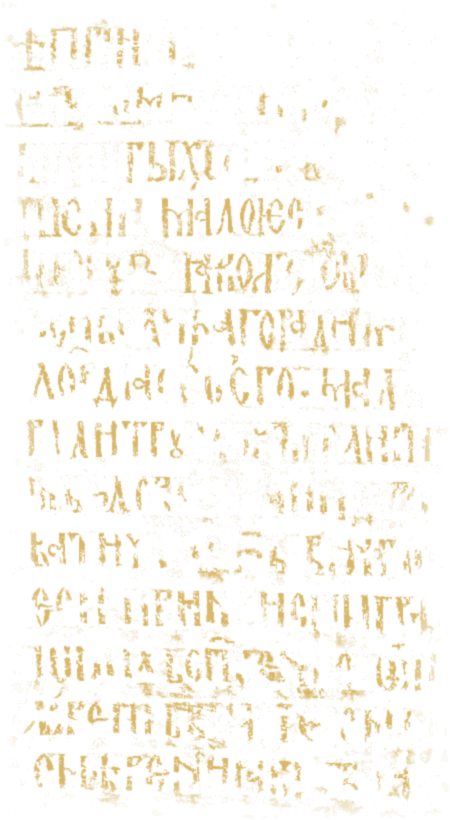
On the west wall of the nave of the church of Manasija, on the north side of the main entrance, is the founder's fresco of the holy Despot Stefan Lazarević. The founder is represented with dignity and solemnity, with short hair and beard, an elongated face with a thin nose and arched eyebrows. His garments are sumptuous, adorned with golden double-headed eagles; the Despot's purple mantle is decorated with golden details, while in his right hand the Despot holds a scepter, and in his left the model of his endowment - the monastery of Resava. Above, Christ is painted lowering a crown from the heavens onto the Despot's head, while angels bring a sword and a spear, symbols of authority. On the scroll that the Despot holds is inscribed a prayer in which