

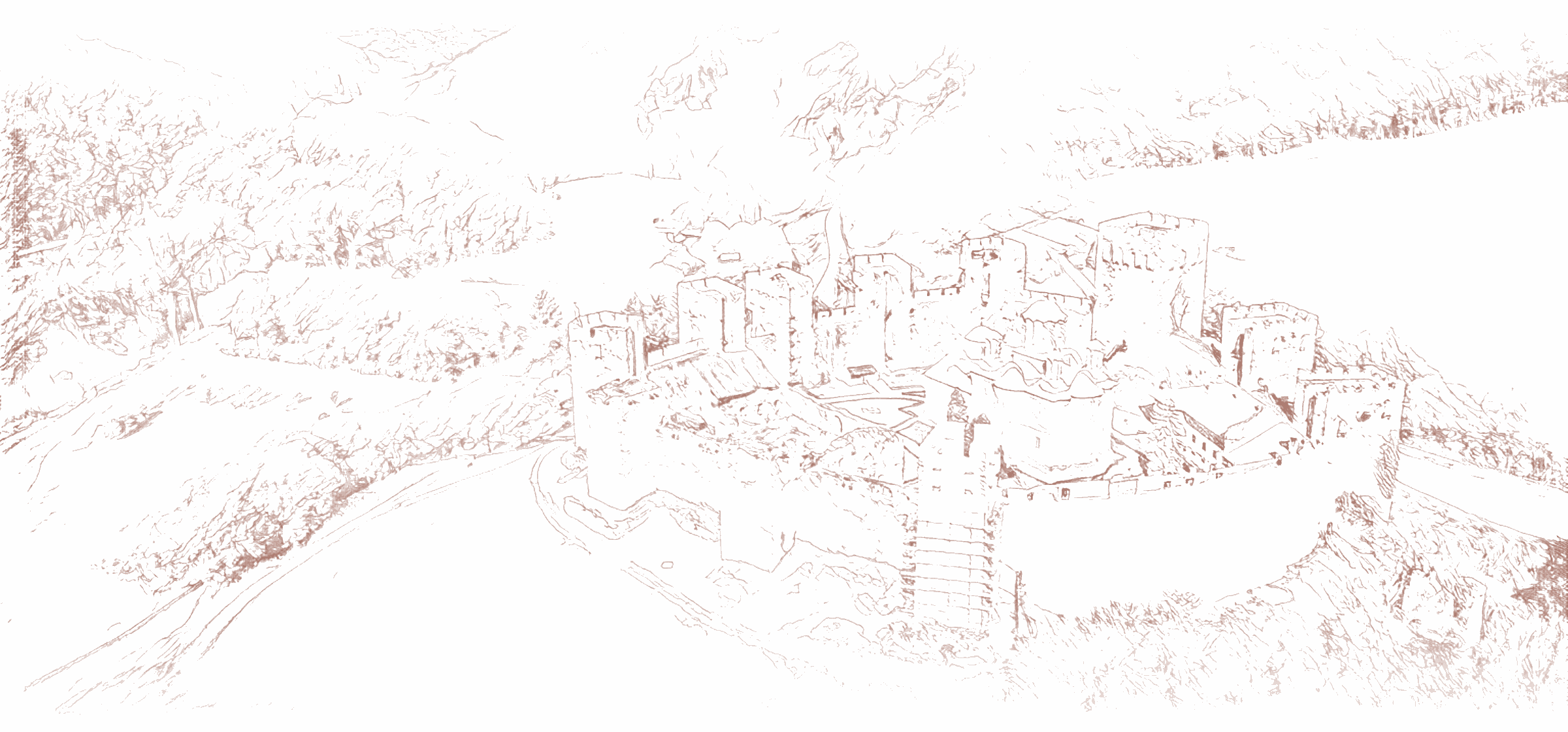
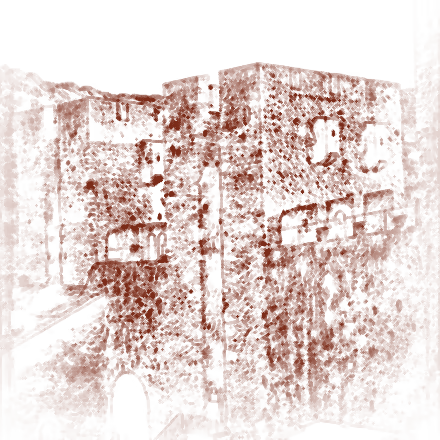

The bell tower of Manasija Monastery has changed its location over the course of history. It is not clear where the Manasija bells were located and from where they rang out in ancient times. In more recent history, the Manasija bell tower was most likely situated north of the narthex, then somewhere near the entrance to the monastery complex, and finally in the tower on the northern side of the entrance to the Resava fortress. During the works on the repair and restoration of the fortress, it was necessary to remove the bells from the tower. Thus for a time a small bell tower was in use at the monastery, located in the southeastern part of the monastery courtyard, in the direction of the altar area of the Manasija Church of the Holy Trinity, under the open sky: it is a simple canopy, resting on metal posts, with a tiled roof above which, like a prayer, a cross rises. Beneath that roof, in the silence of the monastery courtyard, hang four bells of various sizes and weights, which are set in motion mechanically, carrying within them the voice of the centuries.
The history of the Resava bells is as long as the history of the monastery. It is not known where the first Manasija bells were located, nor what they looked like. The Resava bells, sharing the martyric fate of Manasija Monastery, suffered from Turkish oppression. In a certain way, the history of the Manasija bell tower briefly illustrates the history of the monastery: the Resava bells, too, traveled with the monastery the path from a glorious and brilliant past, through the years of suffering, destruction and plunder, of almost complete obliteration, to a painstaking and lengthy restoration, returning to their former glory - to a future of renewal and ascent.
The oldest known mentions of the Resava bells date from the period of Turkish rule. Old Serbian manuscripts, such as the Nikolje and the Branković chronicles, record that around 1476 the Turkish Sultan Mehmed II the Conqueror (1432–1481) carried off the great monastery bells from Resava to Constantinople [NLA 368: 33–34; NLN 169: 71г; SLDĐ 23; SSRL 1220–1221; BL 56–57]. These bells of Manasija Monastery were certainly installed before the monastery was deserted, that is, before the Turkish conquests, in the time of the Serbian Despotate - during the lifetime of the noble founder of Resava, Holy Despot Stefan.
If the great Manasija bells were worthy of the attention of the ruler of the Turkish empire himself, or more precisely of a seizure organized from the highest position - if the Turkish sultan personally ordered that the Resava bells be carried off to Constantinople, we may assume that these bells were of great material, and very probably also artistic, value. It appears, however, that besides the great bells mentioned by the chronicles, there were also smaller bells at Manasija Monastery .
About a hundred years later, in the second half of the 16th century, in 1574, the Turkish authorities ordered the sanjak-bey of Smederevo and the kadi of Belgrade to cast new cannons from the copper and bells in Resava and Kučajna and from the remains of broken cannons. This information may mean that besides the great bells there was some other bell in the Resava fortress, remaining after the first plundering of the Manasija bells; however, this assumption can hold only if these were not bells brought from some other church or some other monastery, which would not be impossible. In any case, in 1574 church bells were once again carried off from Resava. After this year, there is no known mention of the Resava bells for the next 150 years. But the situation nevertheless changed, despite centuries under the Ottoman yoke.