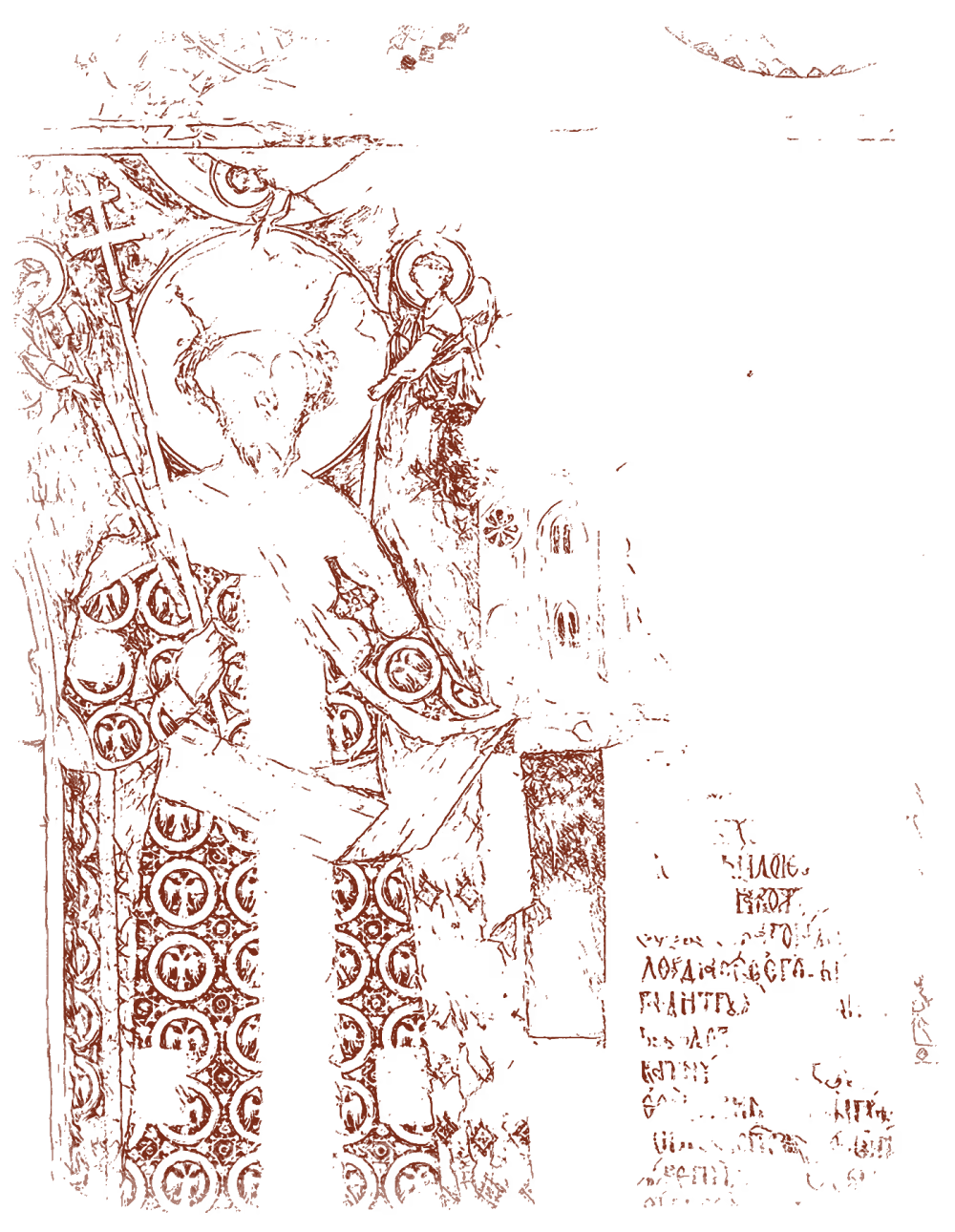
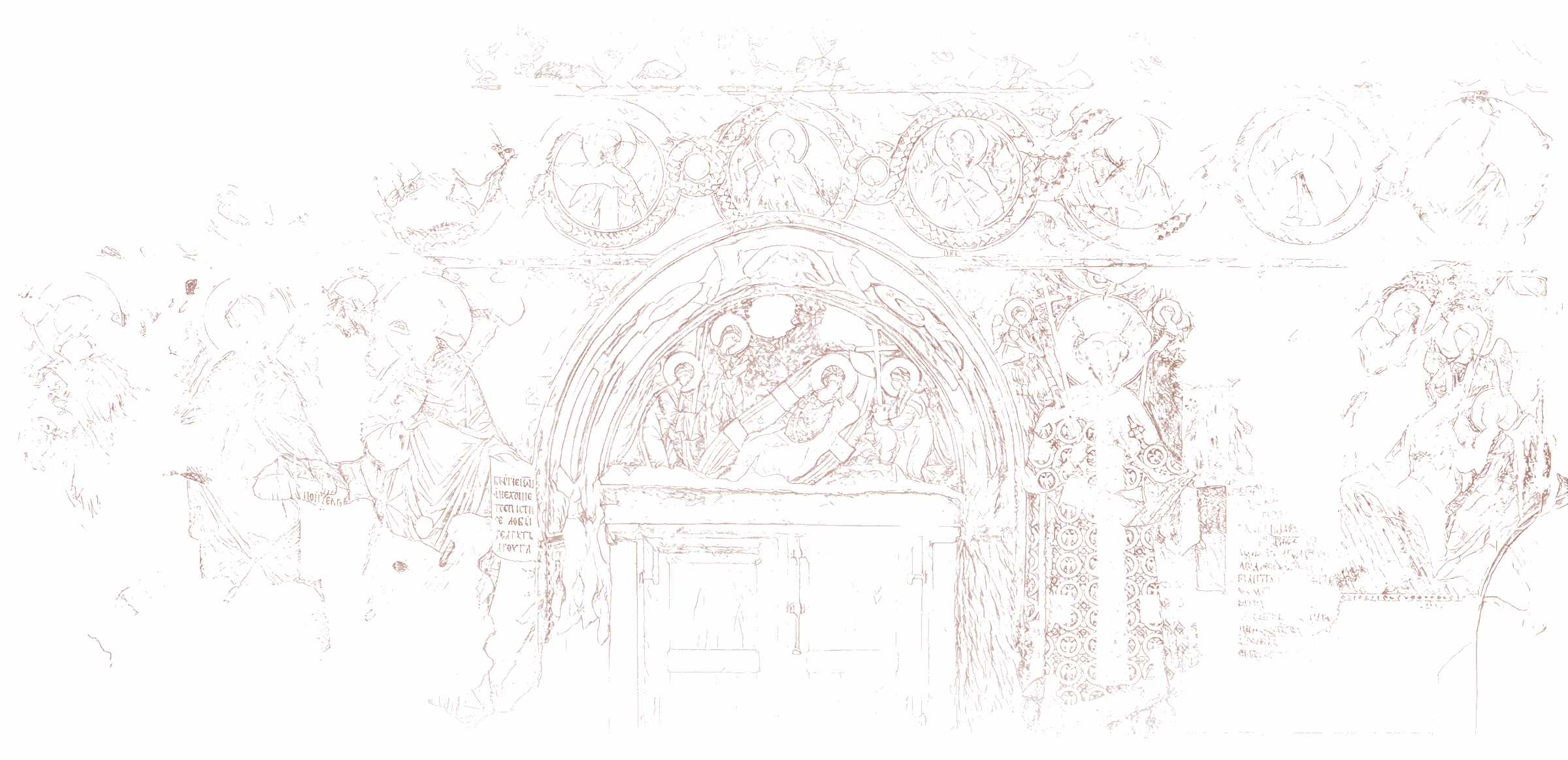

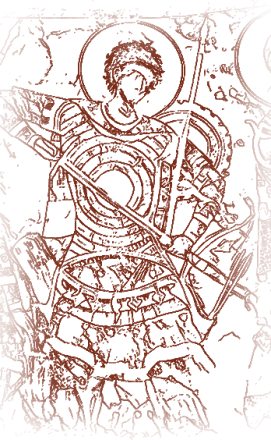
Saint Despot Stefan Lazarević, known in Serbian cultural and historical memory also as Stefan the Tall (1377–1427), the founder (ktitor) of Manasija Monastery, was the son of the Serbian Prince Lazar Hrebeljanović and Princess Milica. He ruled the Serbian lands in the somber times that followed the Battle of Kosovo. Until 1402 he bore the title of prince, after which he became despot, and for the next quarter of a century he ruled the Serbian Despotate. During his reign, despite unfavorable circumstances, hostilities and the ambitions of conquerors from many sides, the Serbian lands experienced a renewal and flourishing of art, culture, literature, architecture, the economy, learning and spirituality. This singular military commander, statesman, diplomat, writer and poet, man of prayer and Christian sage, pious founder of magnificent churches and God-loving ruler, succeeded in preserving his people and his homeland in hard times, and much more than that - in building and preserving communion with God, so that in the memory of the Church and of the people he is remembered as a friend of God - the Holy Despot.
Saint Despot Stefan Lazarević, known in Serbian cultural and historical memory also as Stefan the Tall (1377–1427), the founder (ktitor) of Manasija Monastery, was the ruler of the Serbian lands and the son of the Serbian Holy Prince Lazar Hrebeljanović (c. 1329– 1389) and Princess Milica (c. 1335–1405), known by her later monastic name as Saint Eugenia - Euphrosyne. Until 1402 Stefan bore the title of prince, after which he became despot, and for the next quarter of a century he ruled the Serbian Despotate. During his reign, despite unfavorable circumstances, hostilities and the ambitions of conquerors from many sides, the Serbian lands experienced a renewal and flourishing of art, culture, literature, architecture, the economy, learning and spirituality. This singular military commander, statesman, diplomat, writer and poet, man of prayer and Christian sage, pious founder of magnificent churches and God-loving ruler, succeeded in preserving his people and his homeland in hard times, and much more than that - in
building and preserving communion with God, so that in the memory of the Church and of the people he is remembered as a friend of God - the Holy Despot.
Stefan was born in 1377 in Kruševac, the capital of Moravian Serbia. His father was Prince Lazar Hrebeljanović, the last independent ruler of Serbia, and his mother Milica descended from the extinct imperial Nemanjić dynasty. Prince Lazar and Princess Milica had several daughters and sons; historical sources have preserved for us the names of their five daughters and three sons. Their eldest daughter is presumed to have been Mara (Lazarević Branković, ?–1426), wife of Vuk Branković (c. 1345–1398) and mother of Grgur Vuković Branković (?–1408), Đurađ Branković (1377–1456) and Lazar Vuković Branković (c. 1378–1410); after her, Lazar and Milica had a daughter named Dragana (Lazarević [Šišman?], ?– after 1396), probably the wife of the Bulgarian Tsar Ivan Šišman (c. 1350–1395) or perhaps the wife of his son Aleksandar Šišman (?–1418). It is presumed that after her was born Jela, that is, Jelena (Lazarević Balšić Kosača, c. 1365/1371–1443), wife of Đurađ II Balšić (†1403) and mother of Balša III Balšić (1387–1421), and later the wife of Sandalj Hranić Kosača (c. 1370–1435). Lazar and Milica also had a daughter called Teodora (Lazarević Gorjanski, † before 1405), who was the first wife of the Hungarian magnate Nikola II Gara [Gorjanski] (Miklós Garai II, c. 1366–1433). Their youngest daughter (as is presumed) was Olivera (c. 1375–1444), who is also mentioned in the sources as Despina; thus, for example, she is called so by Konstantin Mihailović (c. 1435–1501), and under that name she is also mentioned in the sources of Dubrovnik. Then, in 1377, the firstborn son of Lazar and Milica was born, who received the name Stefan, in keeping with the tradition of the Serbian ruling families of the Middle Ages. After him the pious parents were also given Vuk (1380–1410), and Dobrovoj - the youngest son, who is mentioned in the Life of Despot Stefan [ŽDS 16], the biography of the Despot composed soon after Stefan's repose by Constantine the Philosopher (c. 1380–1431); it is presumed that the Despot's youngest brother died as a child or very young, since he is not mentioned in other sources. The aforementioned Life
is one of the principal sources from which we learn of the life and deeds of Saint Despot Stefan Lazarević; fortunately, a great number of other sources also exist, of which we shall mention only a few in this brief overview.
The Serbian principality was left without its God-loving ruler when Stefan's father, the Holy Prince Lazar, laid down his life for the venerable Cross in the Battle of Kosovo on St. Vitus' Day (Vidovdan) in 1389. Although besides their ruler the Serbs then lost their finest sons and their independence as well, and although the scale of the Kosovo tragedy was terrible, not everything was lost. Serbian statehood was preserved, and above all the flame of faith and culture was preserved, which has not been extinguished even after so many centuries - thanks, among other things, to the divinely wise and pious, glorious Serbian Despot. The rise of Prince Lazar Hrebeljanović represented an important step toward the unification of the fragmented Serbian regions. Relying on old traditions, the Holy Prince Lazar pursued a policy that not only strengthened the internal cohesion of the Serbian lands, but also laid the foundations for a strong defense against the conquerors of another faith from the east. His legacy and political vision
were continued through the work of his son, Stefan Lazarević. Stefan occupied a significant place in the political history of the Serbian Middle Ages, contributing both to the preservation of territorial integrity and to the cultural and spiritual development of the country. His reign represents one of the most successful periods in Serbian history, in which the Serbian state, despite difficult circumstances, managed to maintain its independence and its standing in international relations.
The Serbian Lands after the Battle of Kosovo
After the death of Prince Lazar, Moravian Serbia found itself in a difficult situation. The country was surrounded by powerful neighbors, while its military forces had been considerably weakened by the defeat in the Battle of Kosovo. In these hard and uncertain circumstances, Stefan, as Lazar's eldest son, inherited power. Being young - he was then 12 years old - he did not at first rule independently; rather, for the next several years his mother Milica was regent.
