


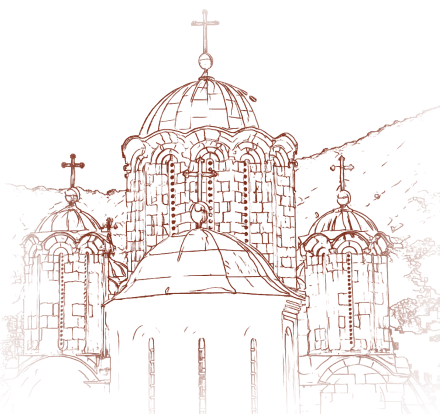
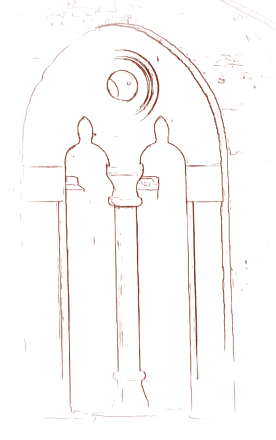
The altar space ends in a semicircular apse on the east side, while the diaconicon and the prothesis are marked by simple wall recesses. Above the very center of the nave rises a polygonal dome, which stands on a cubic base, resting on pendentives. Its aesthetic value is emphasized by the precisely fitted relationship of stone and brick, shallow arcades and elegant biforate windows, some of which are blind, adding a mystical tone to the whole edifice. Built as a single-naved domed structure, the White Church is constructed of stone and yellowish sandstone.
Its strong walls, emphasized in their lower parts by rougher dressing, carry a gable roof. The west façade is adorned with a small rosette, and above the entrance to the church there is a harmoniously worked stone portal: a cross is carved at its center. The floor of the church is made of stone slabs and brick.
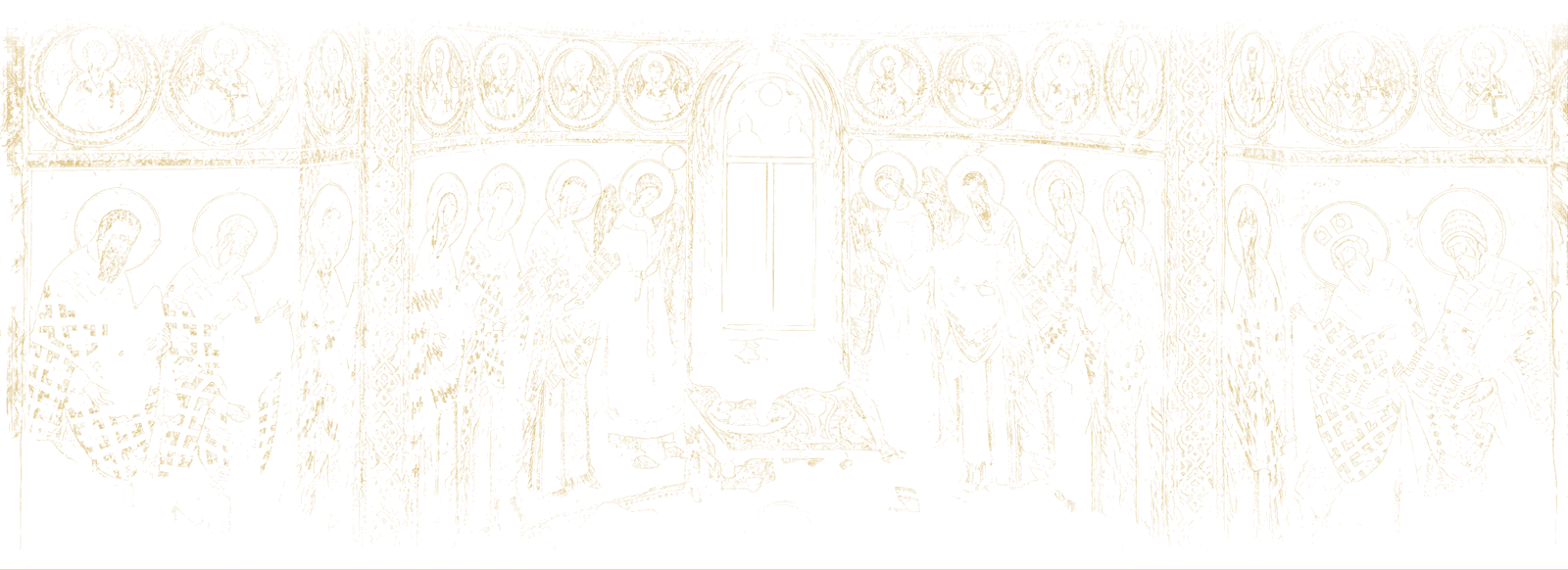
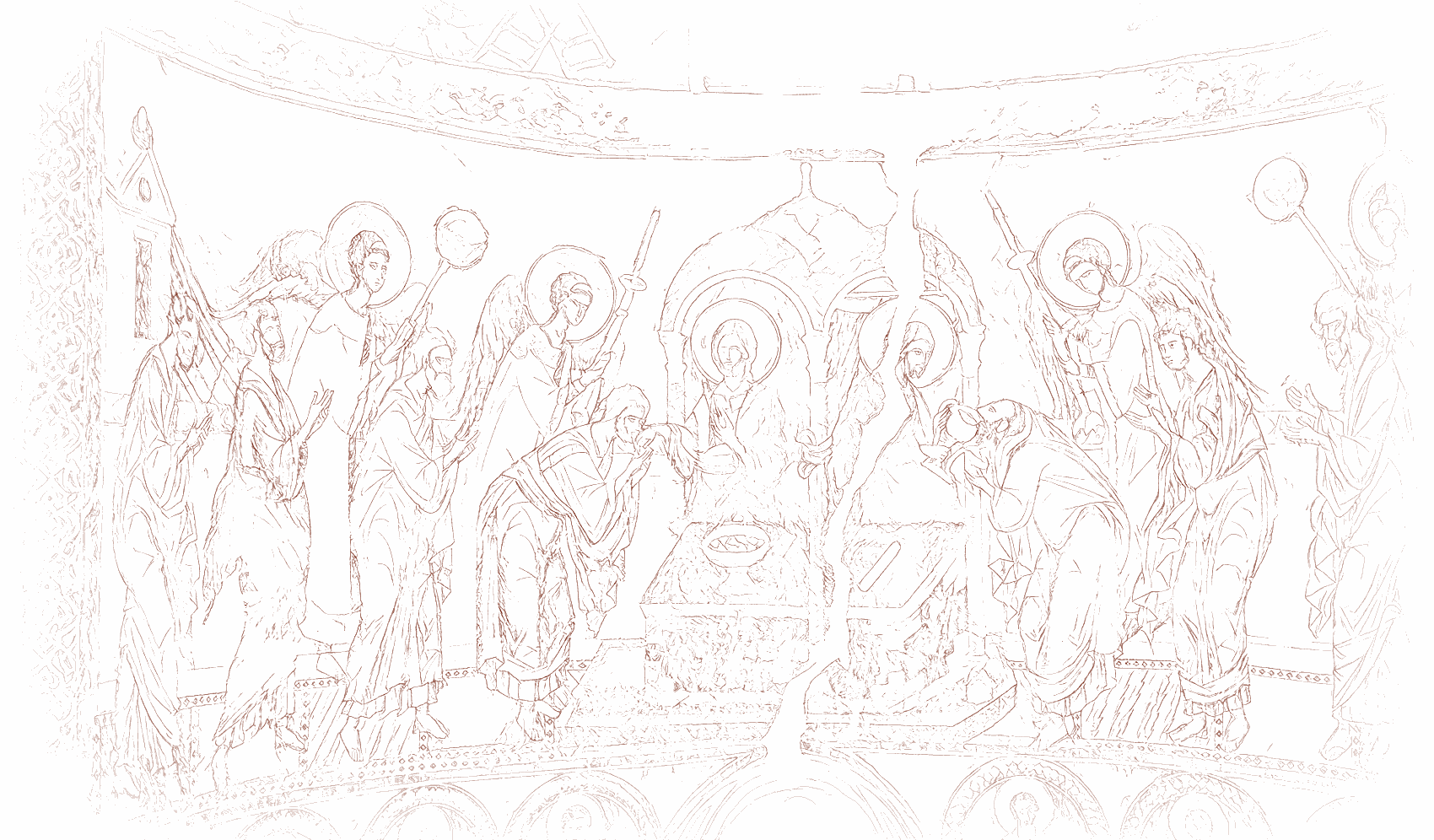
The façades of the church breathe a special beauty. Besides the monumental dome, the decoratively vaulted portal and the small Saracen-style window openings stand out; inside they create a subdued, almost meditative light, heightening the impression of a sanctuary filled with deep spirituality. The floor is made of stone slabs in the narthex, while in the nave and the altar it is paved with brick, adding warmth to the atmosphere. Of the former frescoes only fragments have been preserved, and several figures on the west wall of the nave, which bear witness to the artistic tradition of this region.
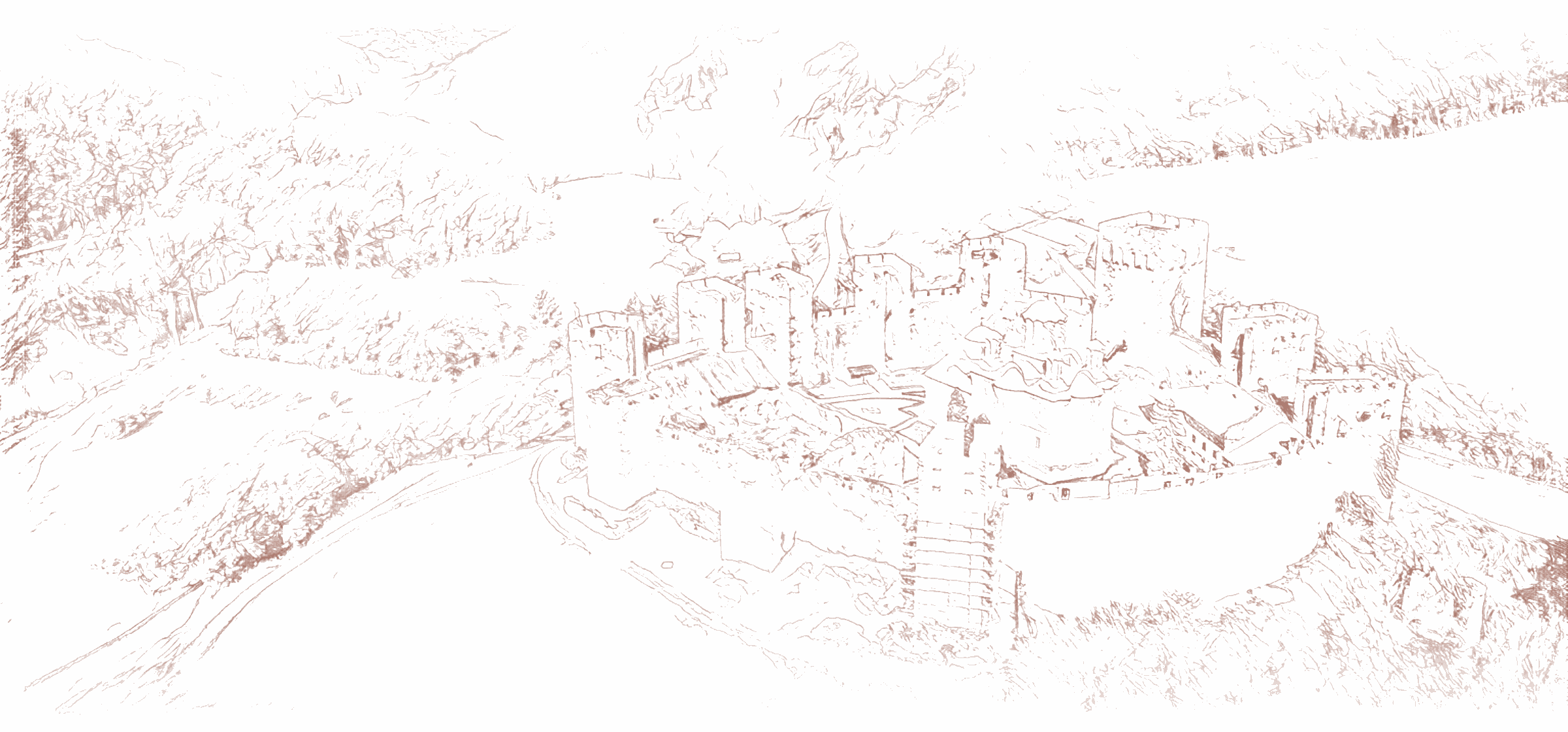
Since the 19th century the White Church has been a metochion of Manasija Monastery; it is possible that this church was a Manasija metochion even earlier, but no surviving historical testimony in support of this hypothesis is known. In the past Manasija Monastery also had other metochia - for example, during the 19th century the monastery of Miljkovo was a metochion of Manasija, and about the Manasija metochia that originally belonged to the monastery after its founding, in the time of Despot Stefan, we can only surmise on the basis of the surviving charters of the Despot addressed to the distant Athonite monasteries - Hilandar, Vatopedi, Rusikon, the Great Lavra, or to the monasteries of Tismana and Vodica in Wallachia, or to the monastery of Mileševa - but unfortunately, until the possible discovery of some source that would shed light on the unknown details of the monastery's past, we cannot for now know anything more precise about the original Manasija metochia and the original Manasija estate in general. The only information we have at present is the trace of the Manasija estate in the Life of Despot Stefan written by Constantine the Philosopher, in which it is said that the pious Despot gave, that is, endowed Manasija Monastery with "villages and vineyards throughout all his land," and confirmed this with his signature [ŽDS 52].