


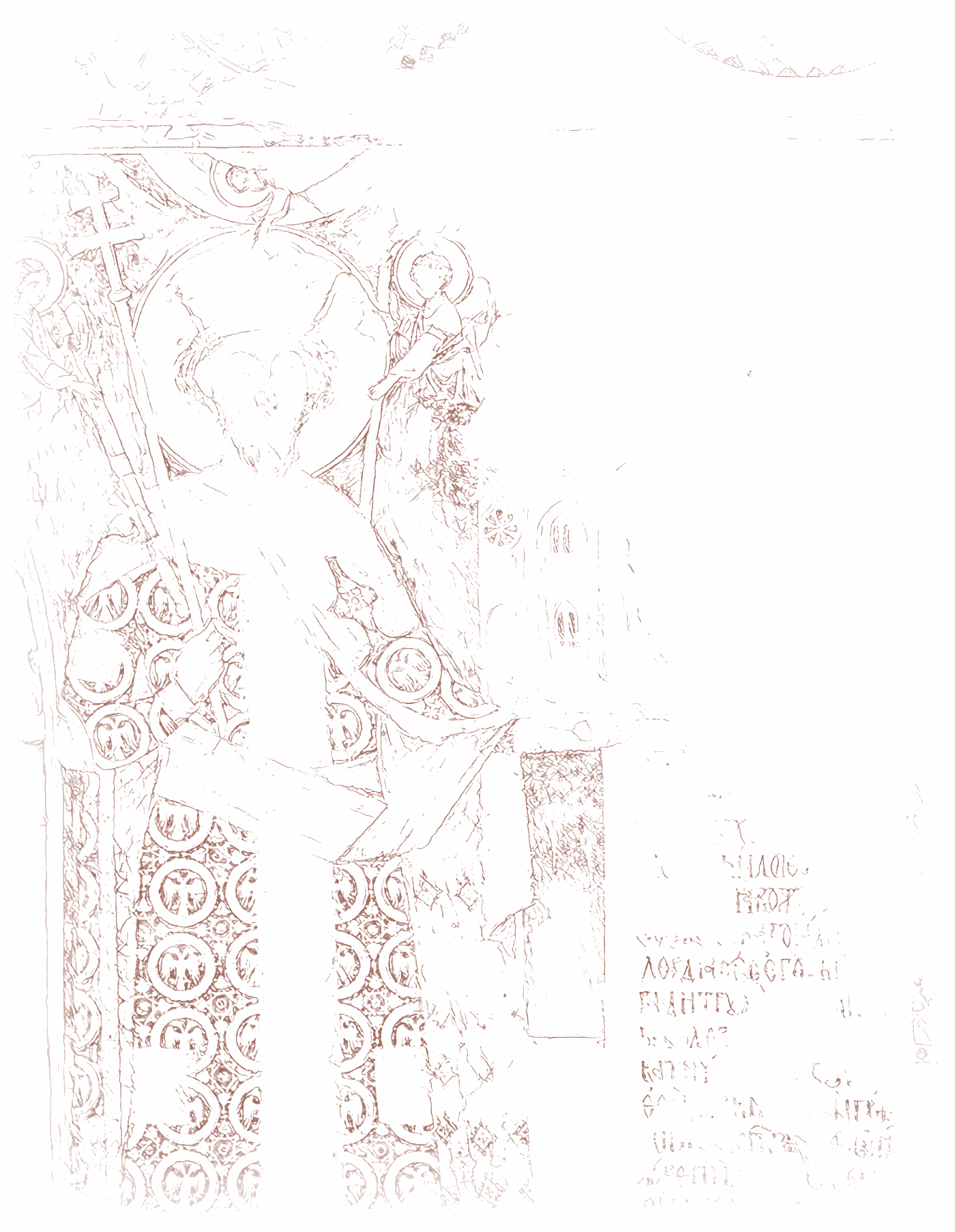

comparison with the prologue ones; these chapters seem to address the court and the urban elite - among whom the ideals of chivalry and an interest in history were deeply rooted. In these parts of the Life, Despot Stefan Lazarević is presented as an invincible knight, a brave protector of the state and the people, but also a protector of all Christians, which, in keeping with the Western European cultural currents of that time, could have been the basis for the creation of a cult, in an age when holy rulers were exalted as warrior figures. However, it does not follow from this more extensive Life that Stefan Lazarević himself was regarded as a candidate for sainthood on the basis of his military and royal feats.
At the very beginning of the Life, Despot Stefan is compared with the biblical prophets and leaders: he is like Moses, like Joshua the son of Nun in courage and faith and in the ability to fight for his people, like the judges of the Old Testament in wisdom and justice; like the all-wise Solomon he is humble and dignified, unsurpassed in a meekness so great that it brought about reconciliation among warring peoples and lands, and the establishment of harmonious relations with both East and West. In this description the Despot's deep faith and Christian mercy stand out as the fundamental traits of his personality.
He is a new Solomon, open to the nectar of divine wisdom, which he draws from the God-inspired writings: he gathered "from the divine writings /books/ what is pleasing to God, (and) in almsgiving and faith he was like no other," writes Constantine, and continues: "He lived together with the eastern and western (rulers); he accepted all good customs..." The writer emphasizes that the Despot was devoted to the Church and pious - he observed "the order at the service of God, and kept to the rule at the (Gospel) readings and prayers" [ŽDS ..гi..].
The genealogy and short account of Holy Prince Lazar - a short hagiography within a hagiography - appear in this Life as an expression of the encouragement of Stefan's cult, setting forth Saint Lazar of Kosovo as an example, and his cult as a foundation. In addition, it is as though Lazar's sanctity here becomes interwoven with Stefan's right to rule: the brief narrative of the right-believing Holy Prince appears here as an encouragement of Lazar's cult, while at the same time serving as a legitimization of Stefan's rule.
One of the striking moments in the Life is the Despot's repentance for the injustice he had done to the silver miners of Srebrenica, which according to the writer of the hagiography raises him above the glorious Emperor Theodosius - whose conscience did not trouble him, so that he did not repent after the injustice done to the people of Thessalonica. Namely, according to the narrative given by Constantine the Philosopher, the moving services of Passion Week, that is, of Holy Thursday, the only day of the year when "Of Thy Mystical Supper" is sung at the Liturgy ("Of Thy Mystical Supper, O Son of God, accept me today as a communicant"), shook Despot Stefan and moved him to repentance and weeping from the depths of his soul. This Christian sincerity makes the Despot the ideal of a holy ruler.
After his repose, wondrous portents occur: sparks descending from the sky and causing fires, like a fiery message, thunder proclaiming grief, and an eclipse of the sun, and