
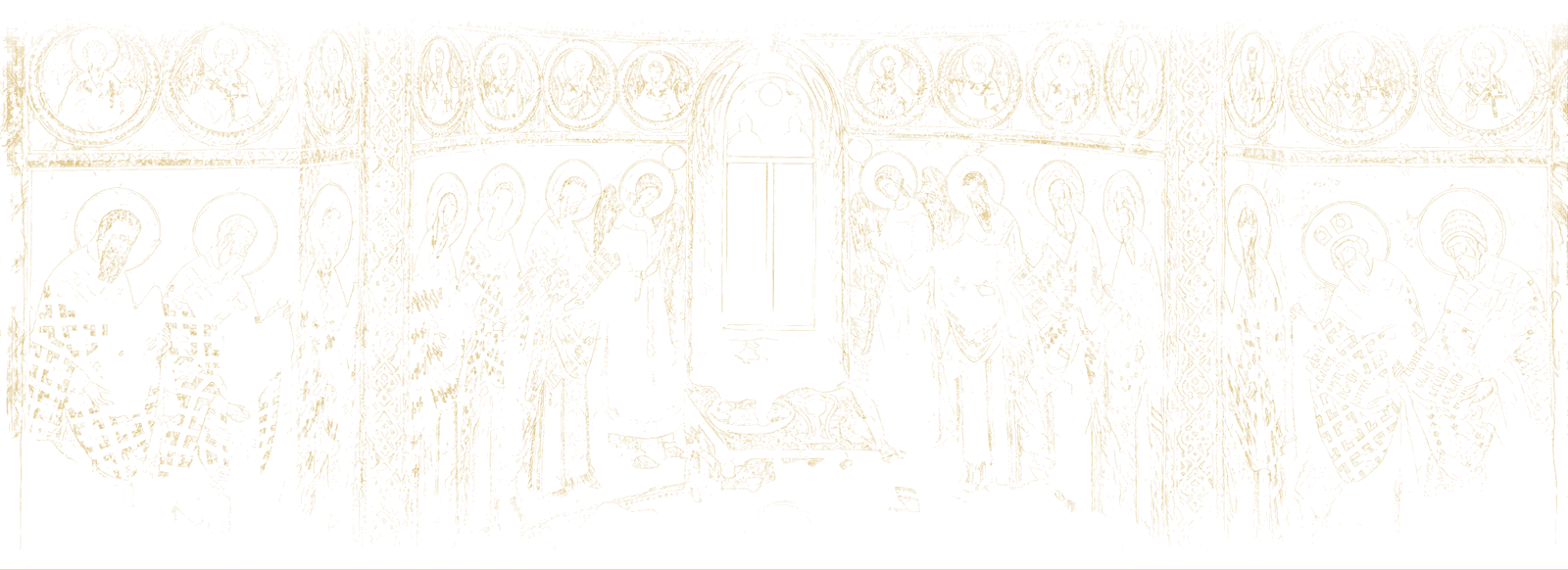
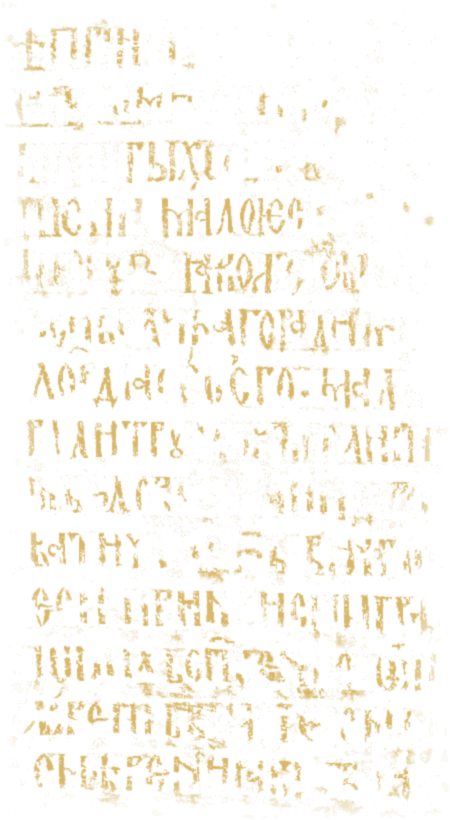
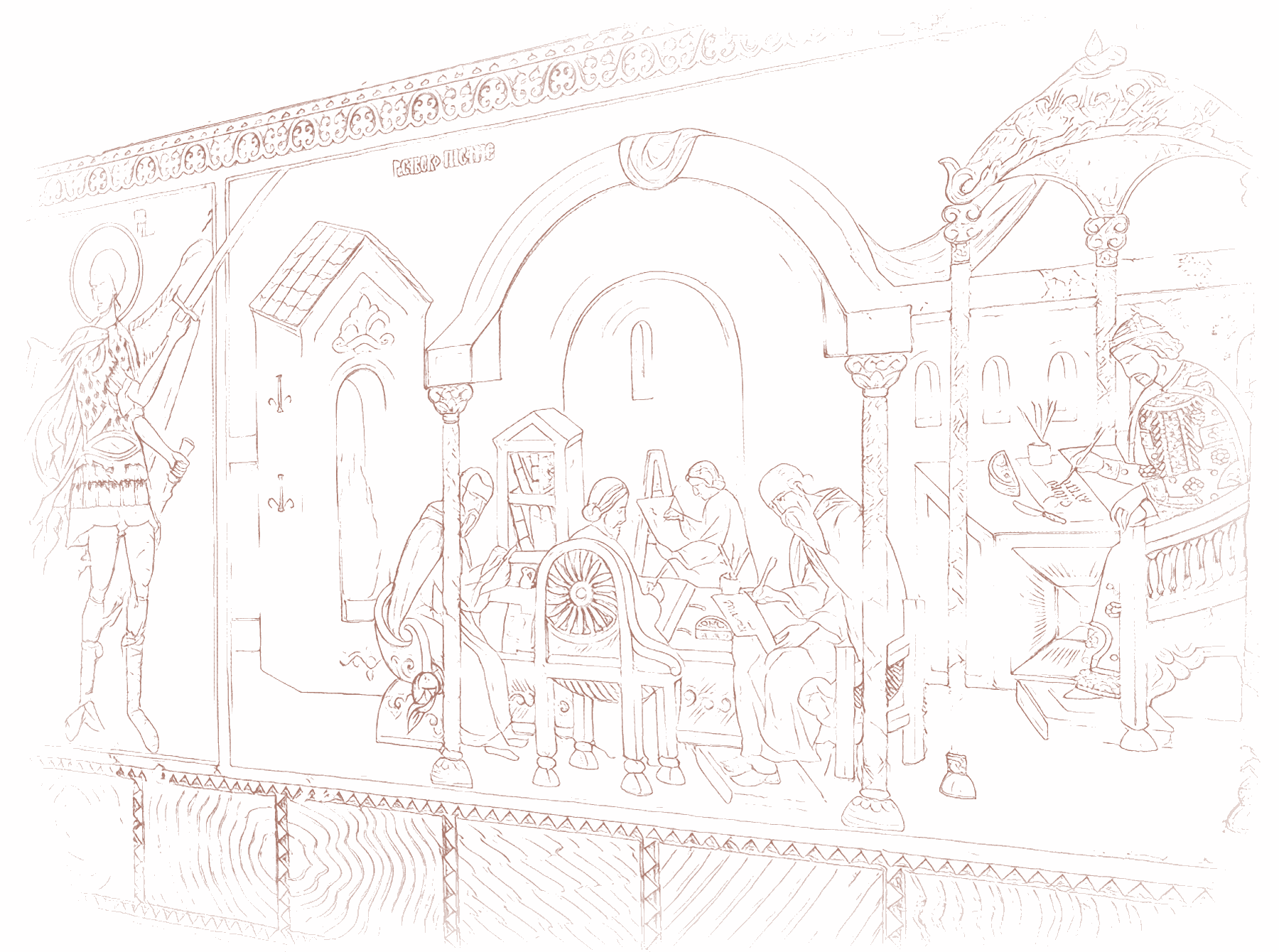

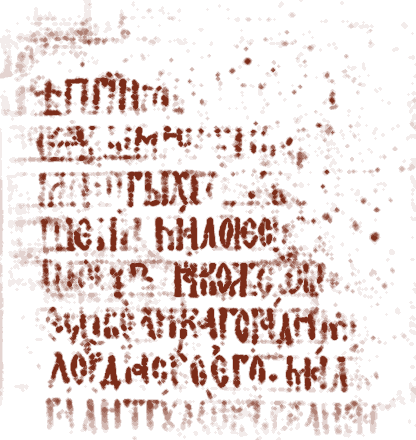
establish and codify the new rules of the Resava orthography. Although the innovations this orthography introduced in relation to the earlier Raška orthography sometimes made the Serbian language more complex, at bottom they represented a striving for greater clarity and order in writing. In his work, Constantine the Philosopher explained in detail the necessity of regulating the orthography of the Serbian Church Slavonic language, relying on the models and principles that had been laid down by the reform of Saint Euthymius of Tarnovo (c. 1325–1403). His work was not merely a theoretical treatise, but a vision that aimed to give Slavonic literacy a unity and a standard that would bring together its various variants and introduce order into the writing practice of the time. The reform of Euthymius, carried out in the Bulgarian lands, served as the inspiration for this undertaking, since it strove for the restoration of the old, original forms and for purity of language, while at the same time introducing clear and strict rules. Constantine recognized the significance of this reform and endeavored to adapt its principles to the Serbian context, restoring to orthography the dignity and aesthetics it had lost in the meantime. By adopting these principles, the Resava School became not only a guardian of linguistic tradition, but also a key center for the creation of a unique cultural and spiritual identity, uniting ancient Slavic roots with an innovative and contemporary approach. This effort was not only a literary but a deeply spiritual and cultural undertaking, directed toward preserving identity and advancing education in complex and turbulent times. The Resava authors wished to preserve their cultural and spiritual achievements from corruption, to return to the text and the language their original appearance and meaning, that is, to renew and purify it through archaization: on the foundation of this Renaissance striving for renewal by turning to classical models, there developed a particular spiritual renewal that set in motion the cultural flourishing of the Serbian lands. In the region of Resava arose one of the most significant European copying schools of that time. Texts were translated there for ecclesiastical and educational needs, but also for the needs of the nobility, as well as of Despot Stefan himself, who, as is presumed, possessed a very splendid library. In that school, besides theological and edifying writings, philosophical treatises, historical chronicles and works of poetry were also studied. This copying school, although Manasija Monastery was its epicenter of a kind - as is held, for example, by the historian of Serbian literature Jovan Deretić (1934– 2002), or the historian Miodrag Al. Purković (1907–1976), or the linguist Pavle Ivić (1924–1999) and other researchers; on the other hand, Milan Kašanin (1895–1981) takes the opposite position, denying the importance of the Resava monastery as a center of literary work - also encompassed other monasteries of the Resava region and its surroundings, as well as the wider areas of the Serbian Despotate, and the regions in which Serbian cultural influence, at that time great and strong, was present. Among the scribes, like pearls on the string of history - more precisely, among those few whose memory has been preserved - there stand out the Monk of Dalša, who copied a great number of books for Despot Stefan, Gregory of Hilandar, who at the Despot's command compared the Chronicle of John Zonaras with the Greek original and edited it, the Athonite monk Dositej, the priest Venedikt and other translators and scribes; many of them remain to us
Manasija Monastery · Imperial Lavra of the Holy Trinity

Manasija
loading the page