Despot Stefan Lazarević
Charters of Despot Stefan to the Great Lavra Monastery
Page 4 of 11

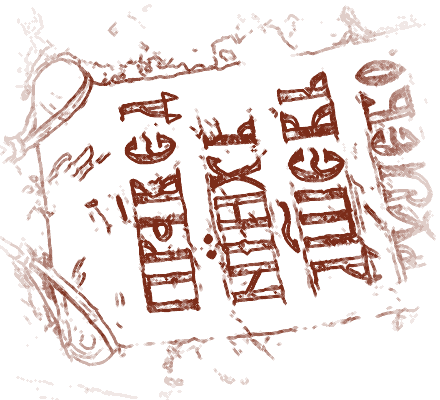
On the other hand, Academician Sima Ćirković defended the authenticity of the charter, explaining that the expression "tsarstvo mi" (which also appears in other charters of Despot Stefan Lazarević) was not an expression of pretensions to the imperial title, but had been accepted for despots within Byzantine practice. Ćirković also showed that the formulary of the charter contains no grounds for doubting its genuineness. A paleographic analysis by Academician Dimitrije Bogdanović (1930–1986) showed that both texts date from the first half of the 15th century.
The charter of Despot Stefan to the Great Lavra Monastery from 1407 is a significant document that bears witness to his support for the monasteries and his role in preserving the Orthodox tradition. Among other things, the charter shows that Despot Stefan expanded the estates of the Great Lavra in the Serbian lands. Although there are certain historical doubts about its authenticity, analyses suggest that the text of the charter originated in the first half of the 15th century. Regardless of this, it remains an important source for the study of relations between the Serbian state and Mount Athos in the Middle Ages.
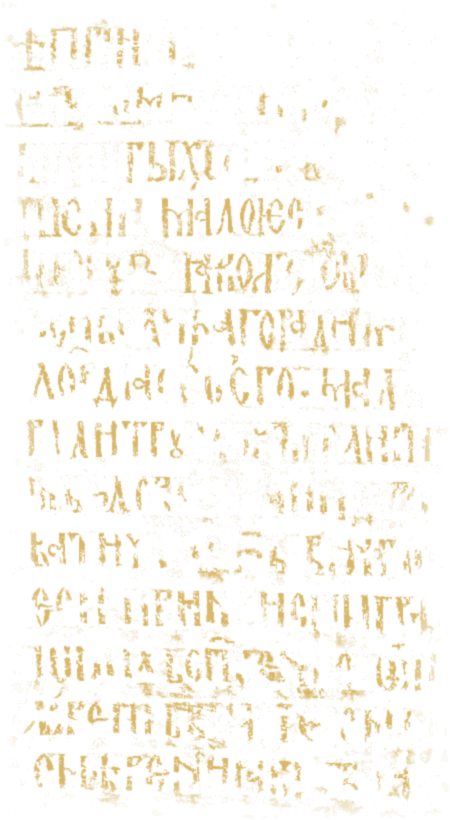
The last surviving charter of Despot Stefan Lazarević for the Great Lavra was issued at the beginning of 1427, a few months before his repose. In it the right-believing Despot set out the manner in which the monastery would arrange the prayerful commemorations and memorial services for him, and as an additional gift to the monastery he donated silver candlesticks and the annual revenue from the customs at Novo Brdo. The original of this charter, confirmed by the Despot's signature and wax seal, has been preserved in the archive of the Great Lavra Monastery. This precious document, which sheds light on Serbian ties with Mount Athos and on conditions in the time of the Serbian Despotate, has been published several times; the text of the charter was translated into modern Serbian by A. Mladenović.
By the charter issued to the Great Lavra Monastery in the second half of January 1427, the Despot donated to the monastery "two silver and gilded candlesticks of sixty litrae of silver," that is, two large candlesticks of about 20 kg of precious metal, as well as an annual income for the monastery of twenty litrae of silver. Constantine the Philosopher, a contemporary and biographer of Stefan Lazarević, mentions some of these great gifts of the Despot to the Athonite monasteries in the Life of Despot Stefan, and says explicitly that he "adorned" the Athonite lavras "with many-shining lamps, which shine (with) gold" [ŽDS 52], comparing the splendor of the Athonite churches with the splendor of the Manasija Church of the Holy Trinity, which nonetheless surpasses them.
The Despot's bequest to the monastery - that after his repose liturgical commemorations be made for him, and that memorial services be performed for him at the appointed times according to the rules of the Church (on the third, ninth, twentieth and fortieth day after death, then a half-year commemoration, and after that annual commemorations), as for other pious rulers - according to the church typikon, with koliva and with a meal, that is, a memorial repast, is an integral part of his charter to the Great Lavra Monastery from 1427. These details perhaps also reveal that the right-believing Despot sensed that the end of his earthly life was drawing near, and they certainly once
again show how the Despot's piety was ecclesial and liturgical.