



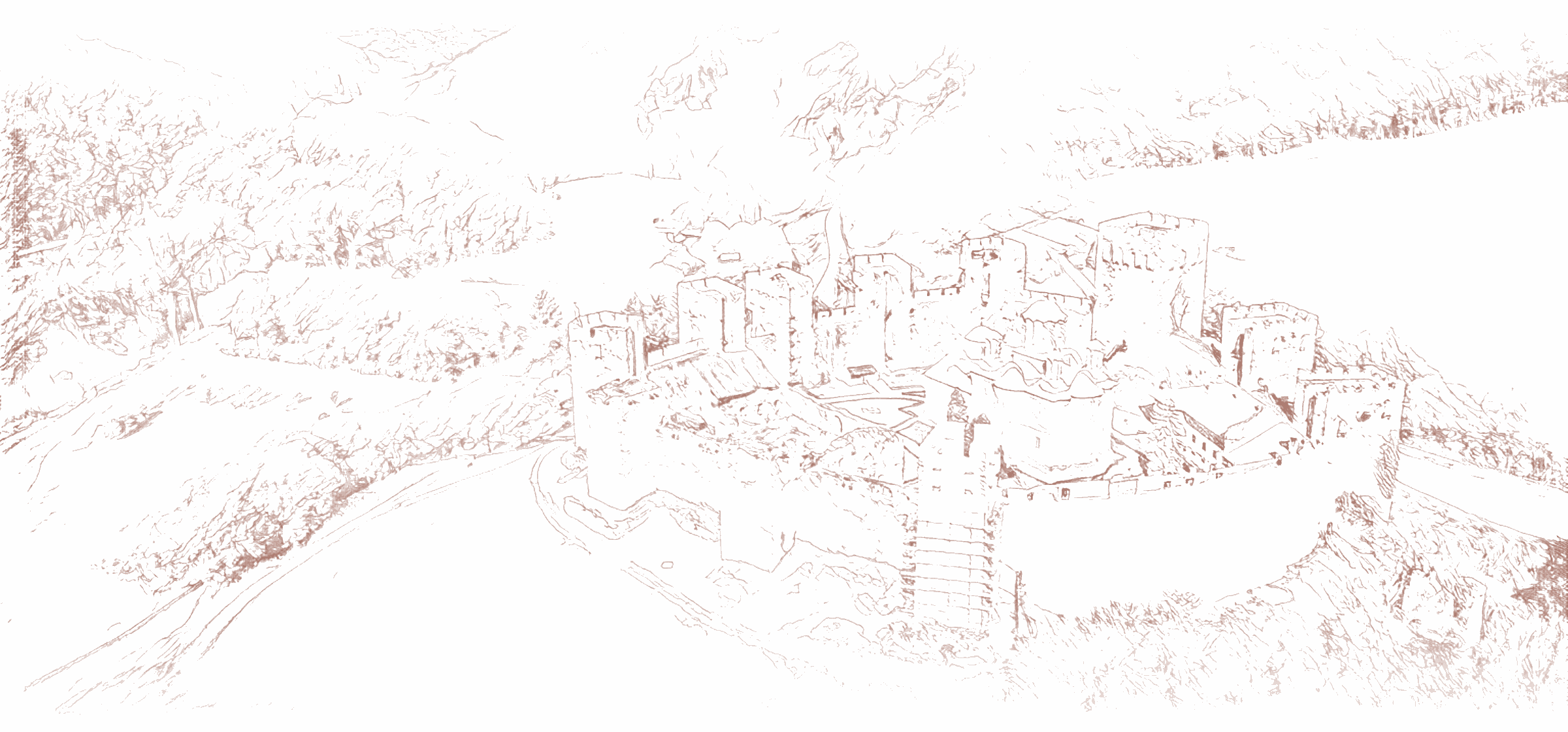
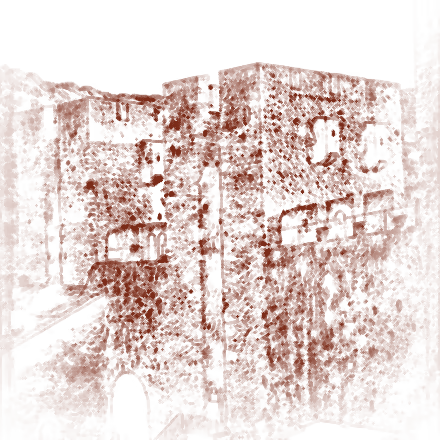

East of the Manasija Church of the Holy Trinity, pressed close against the eastern ramparts of the Manasija fortress, rises the magnificent monastic lodging with a chapel dedicated to Saint Despot Stefan. This building, which carries within it the spirit of the past and of devotion, consists of a basement, a ground floor, an upper floor and an attic. The dimensions of the splendid monastic lodging of Manasija Monastery are imposing - the building is almost 60 meters long and 10 meters wide. The stone-built basement contains the monastic kitchen, the refectory, a storeroom and a boiler room, while the ground floor holds spacious halls for receiving guests, an office with the archive, a kitchenette and several monastic cells. Further along is the winter chapel - the Chapel of Saint Despot Stefan, the first church dedicated to him. The upper floor holds the monastic quarters.
In the 1970s, after archaeological research in the eastern part of the Manasija precinct and after the necessary restoration works on the ramparts and towers, the need arose to build a new lodging for the monastic community.
In 1972 Abbess Paraskeva of Manasija requested that the condition of the dilapidated building of the old lodging be examined by the official authorities. Manasija Monastery was then visited by representatives of the Eparchy of Braničevo, the Religious Commission of the Government of Serbia, the Municipality of Despotovac and the Resava deanery. The conclusion was unequivocal - the old lodging, built in 1932, was so badly damaged that restoration was out of the question. At the request of the sisterhood, the Institute for the Protection of Cultural Monuments drew up a design for the new lodging, which the architect Ivan Kostić presented in 1973. The construction of the new building was approved.
On the Feast of the Exaltation of the Cross in 1973, Bishop Hrizostom Vojinović of Braničevo (1911–1989) blessed the site for the construction of the future lodging, stressing that in the course of construction care should be taken to respect the original plan and layout of the buildings of Manasija. Namely, Bishop Hrizostom noted that the monastic lodging should remain within the limits of the restored rampart of the fortress - that it should not rise above it, that the lodging must rest against the eastern rampart of the Manasija stronghold, and that, on the other side, the lodging should extend toward the precinct as far as the former building from the period of the founding of Manasija Monastery. All of this was observed during design and construction, so that the raising of the Manasija monastic lodging was at the same time its restoration - according to the dimensions of the building from the time of the founder of Manasija, the right-believing Despot Stefan.
With the blessing of Bishop Hrizostom, the consent of the state authorities - the Religious Commission and the Institute for the Protection of Cultural Monuments - and through the love and labor of the monastic community, with the selfless help of numerous benefactors, the lodging gradually acquired its final form - as a place of monastic life and spiritual struggle, but also of doxology to God and prayer of thanksgiving, which is the very substance of monastic service.
Preparations began with the gathering of the necessary materials - iron, brick, lime and gravel - and the works officially began the following year. In July 1974 a tender was held to select a contractor, but the builders' offers were too great a burden for the monastery. So on August 11 the sisters began the works themselves. With their frail but devoted hands they tore down the remains of the old lodging, cleaned the bricks and performed all the necessary physical labor. The earth from the excavation of the foundations was shoveled out by hand and carried by tractor and dumped at a place designated in advance. The tractor was driven by Sisters Anastasija and Angelina, and on the way back they brought sand from the Resava River to the building site. Alongside the craftsmen led by Ćira from Leskovac, residents of the surrounding villages also worked as volunteers.
By the Feast of the Exaltation of the Cross in 1974 the foundations had been completed and blessed, and already on November 8 the slab over the basement was laid. The works continued during 1975 - by the end of 1975 the walls of the lodging had been built, the chapel dedicated to Saint Despot Stefan had been raised, and the whole lodging had been roofed with tiles. By the end of 1976 the lodging had been plastered. During that year and the next the joinery was made, and electricity, heating and water were installed in the lodging.
On the feast of the Descent of the Holy Spirit upon the Apostles in 1977, while serving at Manasija Monastery, Bishop Hrizostom toured the newly built lodging and satisfied himself that it was practically finished and almost ready for use. Some half a year later, on Sunday, October 2, 1977, the monastery lodging was solemnly consecrated. The consecration was performed by Serbian Patriarch German Đorić (1899–1991), Bishop Hrizostom of Braničevo, and the then bishops Stefan Boca of Dalmatia (1916–2003), Vasilije Kostić of Žiča (1907–1978) and Irinej Gavrilović of Niš (1930–2020); the consecration was also attended by numerous priests, monks, craftsmen and benefactors, who through their labor and love had contributed to this monastery building.
