
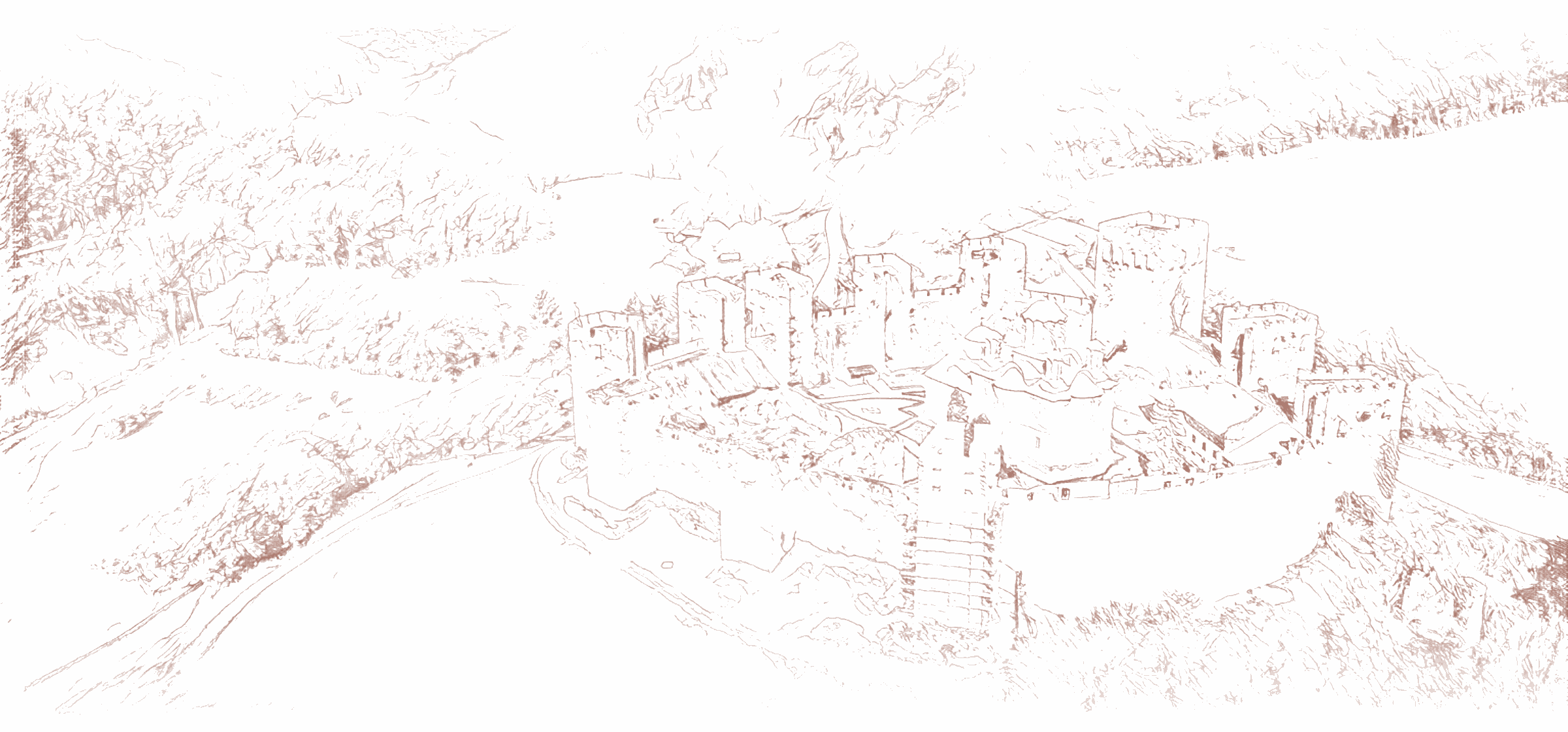
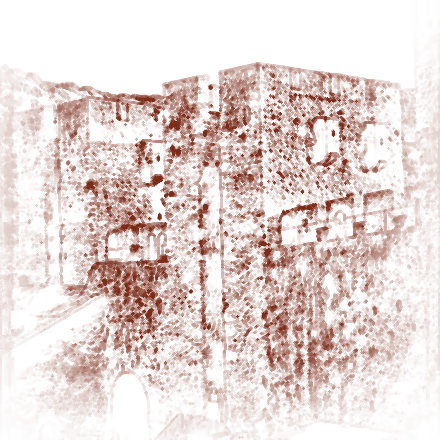

a symbol of the spiritual and cultural flowering of its age - is also unique for its monastic fortification, built in accordance with the standards of medieval military architecture, with the purpose of protecting the monastic settlement from attack and preserving its sanctity. The Resava fortification rises like a crown of stone around the monastery church. It includes eleven towers that guard the monastery, while on the eastern side there rises a separately defended area with a twelfth tower. With the exception of the largest, the donjon tower, the towers are identical in construction: each has a ground floor, six stories and a wall-walk with a crenellated parapet. Linked by mighty ramparts, likewise crenellated, the towers built in this way allowed the defenders to move without interruption through special passages on the fourth stories, making the defensive system impregnable. The only exception in this harmonious sequence is the donjon tower, better known as the Despot's Tower, which dominates the entire fortification with its powerful presence. The Despot's Tower cannot be entered from the ramparts; the only entrance to this tower, whose ground floor is raised considerably above that of the others, leads from the courtyard. Machicolations - rare defensive elements in Serbian medieval architecture - adorn the towers and ramparts of Resava, providing additional protection against invaders. Although these innovative structures had been used in the West since the 12th century, in Serbia they appear only at the end of the 14th and the beginning of the 15th century, which makes Resava a true jewel of the art of fortification. In front of the main curtain wall with its towers there was also a lower rampart with a sloping escarp, as well as a ditch with a counterscarp, allowing a two-tiered defense. This concept served as an inspiration for later fortifications, such as the famous Smederevo. Of particular significance in this system is the Despot's Tower - the most massive and most monumental structure of the fortification. Its ground floor is raised high above the present level of the monastery courtyard, and its interior is divided into five stories by wooden floor structures. At the top of the tower are defensive balconies, machicolations, which greatly increased its security. Compared with the donjons at Ravanica, Stalać and Kruševac, the Resava donjon tower represents the culmination of the refinement of this type of architecture. The most monumental of all the towers of Manasija, the Despot's Tower, located north of the monastery Church of the Holy Trinity, is not only a symbol of the strength and authority of Despot Stefan, but also the last line of defense of the monastery. With its size and massiveness this tower dominates the complex, leaving the impression of an invincible fortress. The main walls of the fortification were further reinforced by lower outer walls, in front of which, on the northern and western sides, a dry ditch was dug. Such a defensive system greatly increased the security of the monastery, making it almost inaccessible to the enemy. The models for the design of this magnificent fortification are found in the citadel of Novo Brdo - the renowned mining center and one of the most important cities of the Balkans at that time. However, the Fortress of Manasija surpassed its models through its unique features. Its donjon tower is the largest of its kind in Serbia, while the innovative solutions
Manasija Monastery · Imperial Lavra of the Holy Trinity

Manasija
loading the page