


Despot Stefan Lazarević
The Life and Deeds of the Ever-Remembered Despot Stefan
Page 28 of 50
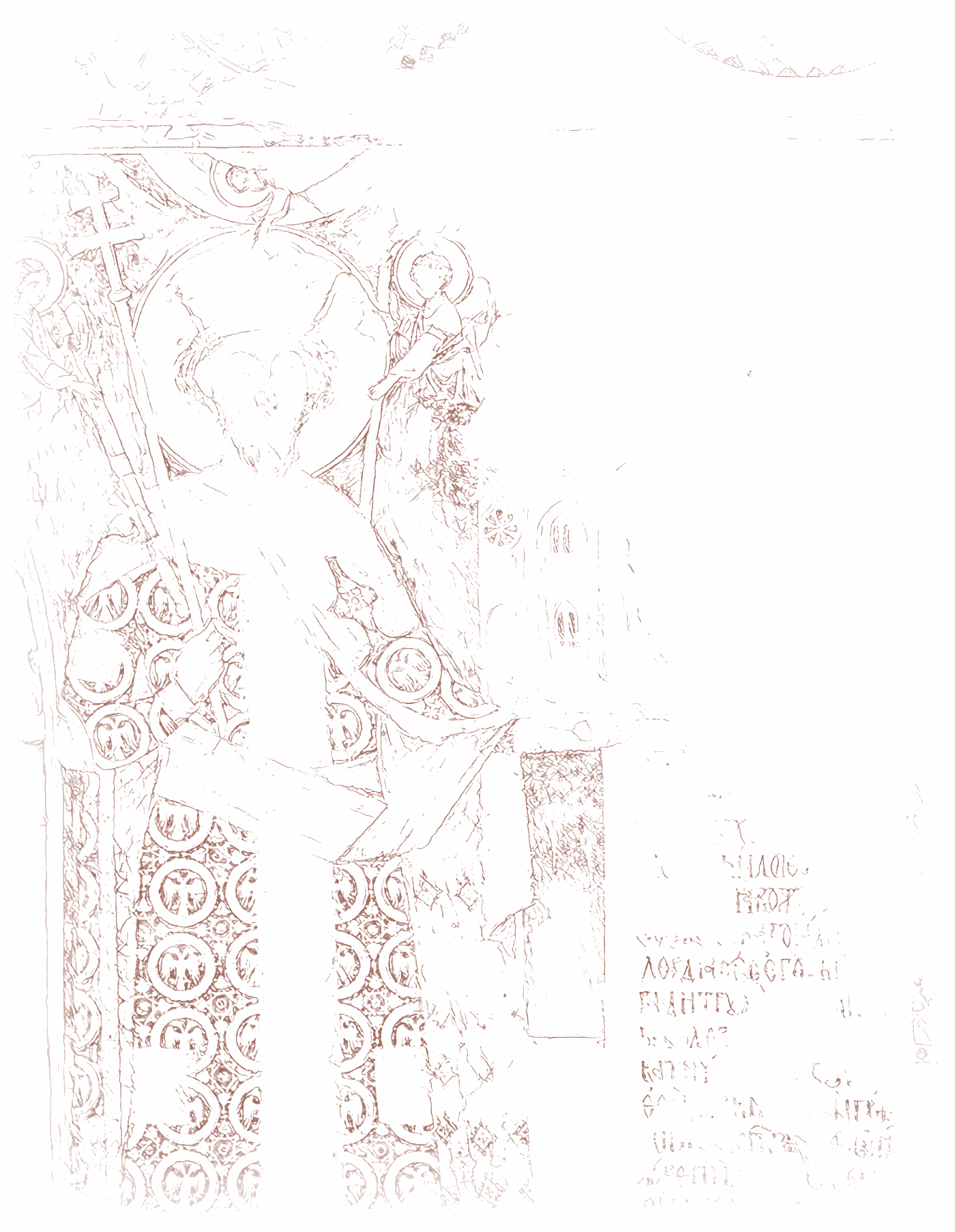
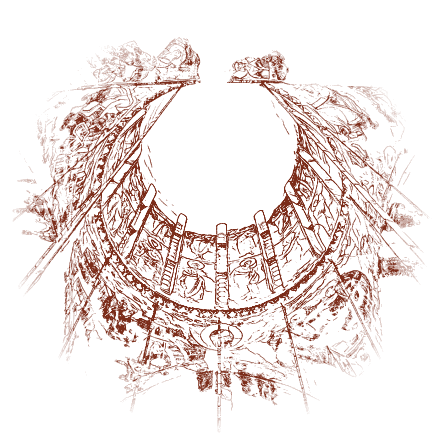
high priests, abbots and other honorable men, and the nobles besides, that all (should be present) at the renewal /i.e., the consecration/ of the church on the day of Holy Pentecost,95 when the Holy Spirit descended, as tongues of fire, upon the disciples of the Word and God. There came also a multitude of beggars, that (all) might receive equal alms, which he always gave them generously. And one could see (how) (that) beautiful and honorable feast was celebrated, so that, in the manner of Solomon when he dedicated the house, it could be said that the people rejoiced, not only because they ate many (roasted) sheep96 as there, but because they also received many gifts. He began to build this house /monastery/ in the year 6915 (1407), and a year earlier the most pious lady Jevgenija /i.e., Milica/, mother of this glorious (Despot), reposed. In monasticism she received this name, and she was buried in her own monastery named Ljubostinja, (dedicated) to the Dormition of the Most Pure Mother of God. These two edifices of the reigning city (Belgrade), which we mentioned earlier, and the city in Resava, he did not cease throughout his whole life to endow abundantly with the finest gifts and to guard and care for (them). Therefore they were not raised in a short time - so as to accord with the accounts (of his) wars - but were (built) over many years.
53. When that envoy mentioned earlier departed, peace and security reigned; yet the (evil one) was not at peace, he who had raised up Cain against his brother Abel, who had done him no wrong. (That devil), then, raised up here too the aforesaid Vuk, who received from the (Turkish) sultan a mighty army, and one might say all his strength. At that time Sultan Süleyman had also conquered the eastern lands, so that (Vuk), coming to Süleyman, said: "I will make war on my brother (Stefan), and either he will give me half of our land and (half) of the cities (with which) I will serve thy Empire, or I will plunder and lay waste the land." This request (the sultan) soon granted. With him he sent the one who had ever shed Christian blood, who in wars was the same as the Ishmaelites, who on the river called Maritsa had been the cause of bloodshed - (it was) Evrenos; and he dispatched other chosen commanders as well. And so they came. Despot Stefan did not wish to cast the pious flock /people/, which the Lord had freed from bondage, back into bondage to be torn apart. And what came after that? They went through all the (Serbian) land like wild beasts, plundering, killing and destroying. They razed some cities as well, and what was worst - they made war not with barbarians but with (a people) of the same kin, (and such a battle) is not easily won. Although the (army) that had come was great, the (Despot) defeated them many times and struck terror into their hearts. And what more shall I say? They feared lest they suffer as David, who cursed the regions of Gilboa97 that neither rain nor dew should fall upon them, because there the blood of Jonathan had flowed; and
- Pentecost, the fiftieth day after Passover, the Jewish Old Testament feast celebrated in spring in remembrance of the deliverance of the Jews from Egyptian bondage. Christians keep it as the feast of the Descent of the Holy Spirit upon the Apostles (Duhovi; the feast falls on the fiftieth day after Easter); immediately after this event the Apostles dispersed throughout the world to preach the Christian faith; it is also the feast of the birth of the Christian Church. This feast is also called Trinity Day - the third person of the Holy Trinity, the Holy Spirit, also appeared.
- 1 Kgs 8:63–66.
- Gilboa, a mountain. Today it is called Jebel Fuqu'a. Its elevation is 518 m, while on the eastern side of the Jordan the land lies considerably below sea level. On its slopes Saul fought his last battle with the Philistines, in which he and his three sons, among whom was Jonathan, were slain. On the occasion of their death David composed one of the most beautiful laments in the Old Testament (2 Sam 1:21).