



Despot Stefan Lazarević
The Life and Deeds of the Ever-Remembered Despot Stefan
Page 18 of 50

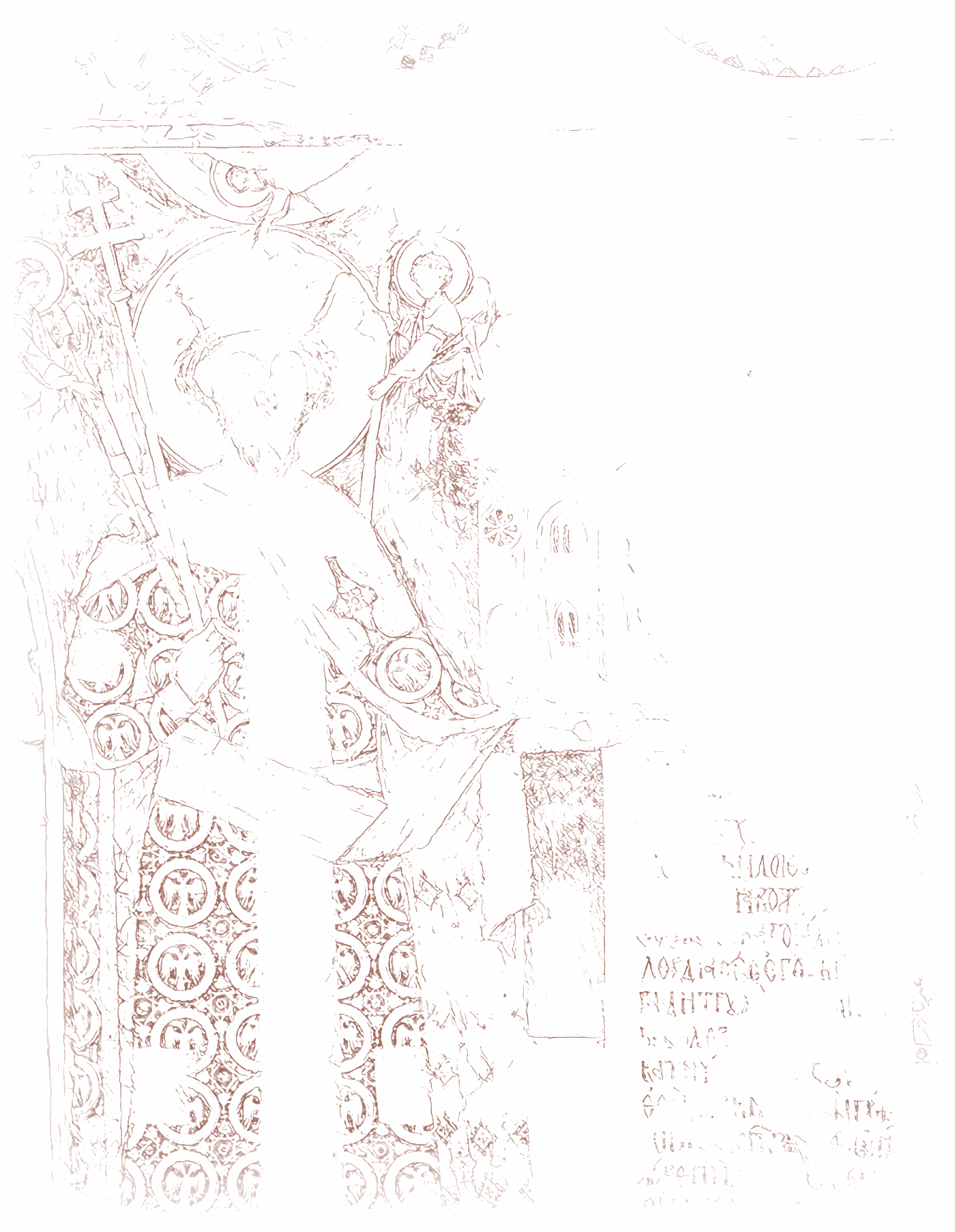
most beautiful, the exceedingly great city of the White City (Belgrade), which, because of (certain) circumstances, had been destroyed, (and I) built it up and dedicated it to the Most Holy Theotokos. And other privileges (I granted) to its inhabitants."
39. Let us continue the story of the great battle. There is a land which is on the border of India, and lies on its northern and eastern side, and it is called Otrar. That land is a land between rivers, encompassed by two rivers. In that land dwelt a man who was the son of the elder of a certain place. That man, by the name of Demir (that is, Tamerlane),68 was cruel and a great tyrant. Going about as a brigand, he came upon certain shepherds, overpowered them and took their sheep, whereupon he was shot with an arrow in the leg, from which he remained lame. Thus, by plundering, he acquired an estate. He gathered a thousand men under his command and with them, by deceit, set out against a certain Kamaradin, the leader of that land, who commanded 10 thousand (soldiers). He defeated him, took that land and suddenly, with those 10 thousand (soldiers), attacked the chief commander of the Persians himself and by deceit broke into Persia itself; the Persian commander climbed a tower, (but this one) seized him and came to rule over all the Persians, having in all a hundred and fifty thousand soldiers. After that he subdued also the surrounding lands, and from there, having grown mighty because of (the booty he had gained) and having surpassed Darius, he held the surrounding (lands), and pouring forth like mighty springs he slew all that he came upon. Little was lacking for him, like Alexander, to subdue all of Hellas, and he boasted also of the west (that he would conquer it), of which we shall speak more fully later, in the 40th chapter. Having thus grown strong and fortified himself, he sent envoys to the Thunderbolt emperor /Bayezid/, demanding of him that he pay him tribute and be submissive (to him), while Bayezid was exhausting and destroying both east and west, and boasted that he would conquer Constantinople too. This one, hearing such (words) and growing angry, declared war and made ready for battle, speaking foully and sending fierce (and threatening) words, "if - as he said - thou dost not come to battle." God hardened his heart as that of the Egyptian Pharaoh, who did not hearken to his counselors, for first their spokesman said (to him): "Hearken to me, my lord, and give him all that he asks, for, since he passes swiftly (through everything), he will withdraw into other (regions), and then, as thou sayest, the inhabited world is in thy hand." For the emperor said to him secretly: "If only we overcome this one with God's help, all will be in my hand, whether the eastern or the western (peoples)." And to the words of Ali Pasha he answered: "Is it not better, O (my) dear one, that I defeat him and that all magnify me, or that I (bravely) accept the final (outcome), than that I submit to him and serve him?" And this one (Ali Pasha) said to that: "If (one) of these two should come to pass, it is well; but if thou errest in both the one and the other, look (to what thou wilt do)." Having entered the place where the emperor was later held in custody, he said: "Remember, my lord, my words - didst thou not err in both the one and the other?" And both of them wept bitterly. The Persian emperor (Tamerlane) raged and was enraged at (these) foul words, and covered the mountains and the fields with (his) army. And Bayezid gathered all his army, both from the east and from the west, and sent (a message) to the ever-remembered Prince Stefan that, if it were possible, he should come with his army. Tamerlane, having entered with his army, was enslaving lands. (Bayezid in haste), pursuing
- Tamerlane (Timur; Constantine the Philosopher uses only Demir), Mongol ruler (1336–1405), a great warrior and conqueror. He emerged victorious from the Battle of Ankara (Angora) in 1402, in which the Turkish sultan Bayezid was taken captive and soon afterward died. Prince Stefan also took part in the battle, as a Turkish vassal, on the side of Bayezid.