


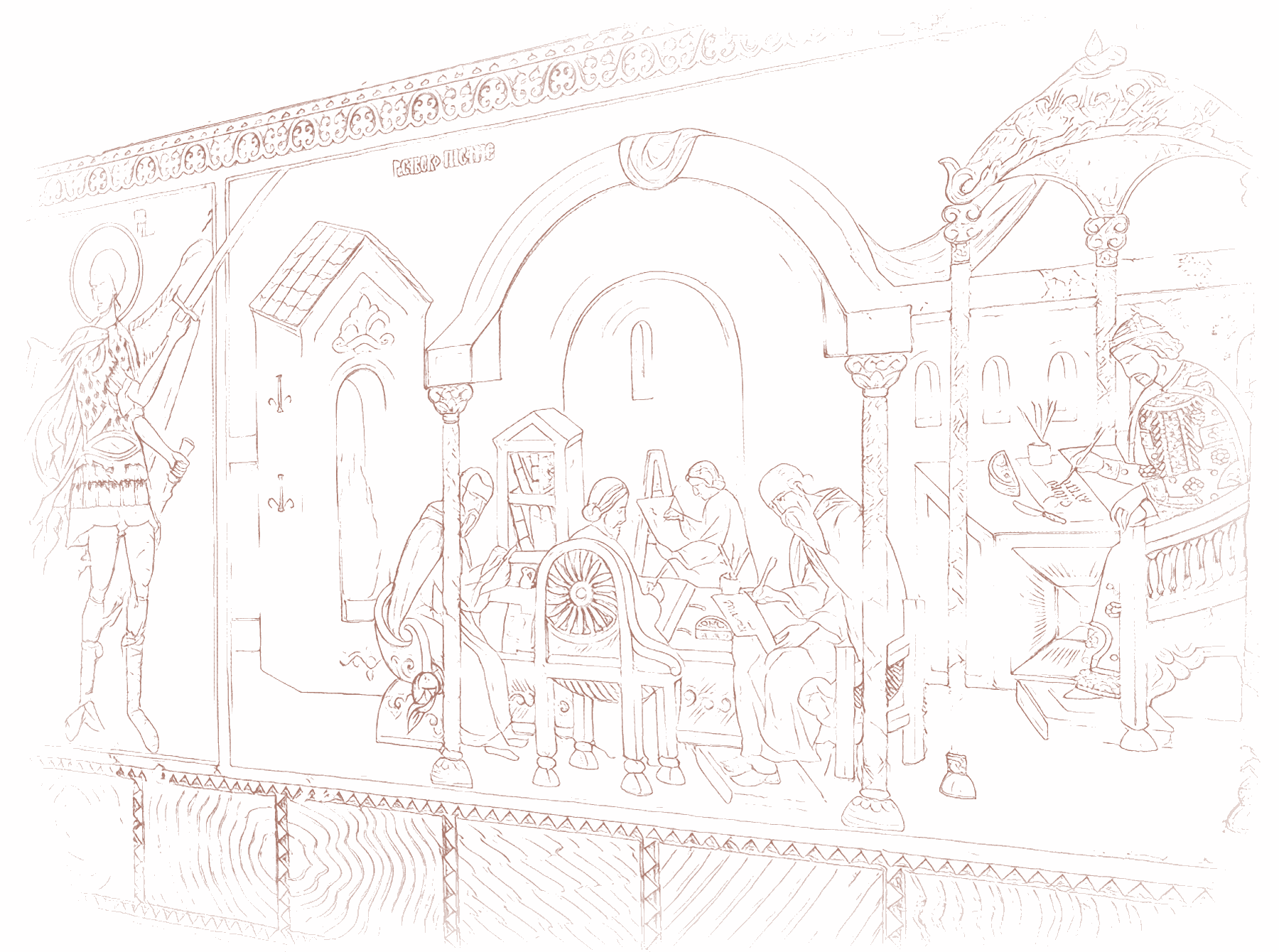
century, includes a note that the name of the monastery arose because of the many monks who lived in the monastery - first as "Monasija", from which "Manasija" later arose; as a second explanation Mišković states that the name "Manasija" arose from the saying "nama sija" ("it shines for us") for the monastery as a radiant and bright place; somewhat earlier, the Austrian travel writer Felix Kanitz (Felix Philipp Kanitz, 1829–1904) recorded that the local people also call the monastery "Namasija", with the remark that this is nevertheless not the name of the monastery. The explanation offered at the end of the 19th century by the archimandrite of Manasija, Kiril Vukelić (c. 1827–1896), was recorded and published by his guest from Russia, Yevgeny Markov (Евгений Львович Марков, 1835–1903); according to the interpretation of Archimandrite Kiril, in the time of Despot Stefan the Tall up to two hundred monks lived in the monastery; some of the guests who happened to be in the monastery told the Despot that there were many monks in his endowment and added: "This is a true Monasija!", and so this name of the monastery has been used since long ago, that is, since the time of the Holy Despot.
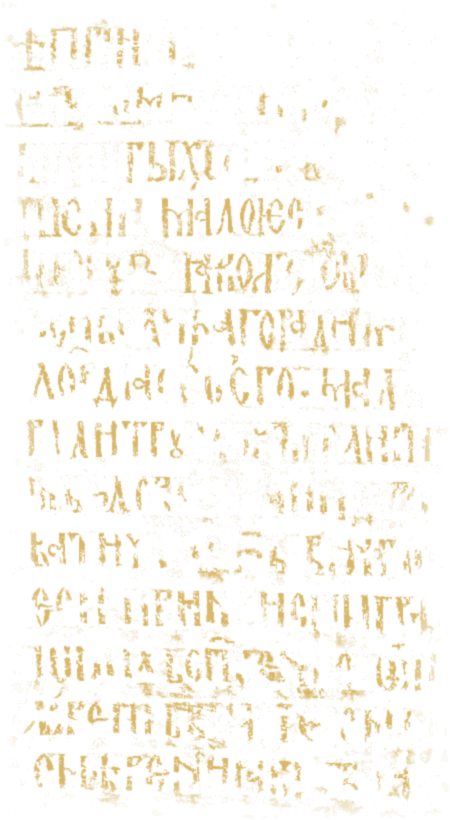
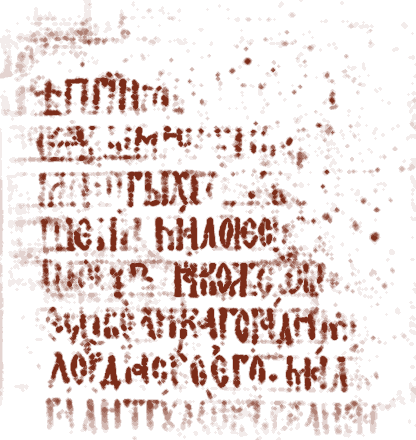
The connection between the Holy Despot, the monastery and the name "Manasija" may certainly be very ancient - the Despot was already called by the name "Manasseh" during his lifetime, as is shown by an inscription composed in 1416/1418. Namely, praising the Serbian lord of that time, Saint Despot Stefan Lazarević, the translator of the biblical Books of Kings, who signed himself as Dositej or Mojsije (according to the philologist and Slavist Vatroslav Jagić (1838–1923), this translator might also have been Constantine the Philosopher), compares the Despot with famous figures from the past (the merciful Cyrus, the most wise Simeon, the exact Ptolemy), and calls him, for his sweetness of speech, that is, "в сладкоглагољаних" ("among the sweet-spoken"), a second Manasseh [SSZN 224]. Some authors have concluded that the translator of the biblical books here has in mind the Judean king Manasseh who reigned in the 7th century before the birth of Christ (c. 697–642 BC), the son and successor of the Judean king Hezekiah (cf. 2 Kgs. 20, 21; 2 Chr. 32, 33; Mt. 1, 10), that is, a figure mentioned in the books he was translating (cf. 2 Kgs. 21, 1–18; 2 Chr. 33, 1–22). It is precisely to this King Manasseh that the famous penitential prayer is ascribed, preserved in the Church's deuterocanonical manuscript tradition (cf. 2 Chr. 36, 23 [a–m]; see also 2 Chr. 33, 19). In that sense, it would be possible that the translator compares Saint Despot Stefan the Tall with the author of this famous biblical prayer, well known in the Orthodox liturgical tradition: this prayer is read at Great Compline as the Prayer of Manasseh, King of Judah ("O Lord Almighty"), and this prayer is referred to, for example, in the rite of the Holy Mystery of Confession and Repentance, as well as in the rite of the Holy Mystery of Holy Unction. The view that the Holy Despot was compared with the biblical King Manasseh has been especially accepted among contemporary authors. According to the biblical dictionaries and the concordance compiled at the end of the 19th century by the American biblical scholar and theologian James Strong (James Strong, 1822–1894), the biblical name Manasseh - in the Old Testament original, in Hebrew ה ֶ ּׁש ַנ ְמ, that is, Mᵉnashsheh (reference H4519 in Strong's Hebrew and Chaldee Dictionary) - comes from the Old Semitic verb ה ָ ׁש ָנ, that is,