
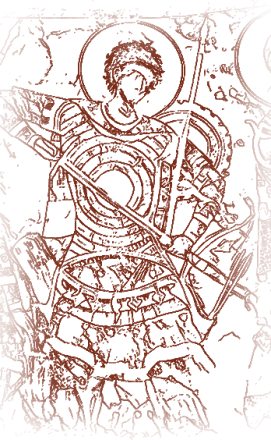
Despot Stefan Lazarević
The Inscription on the Marble Pillar at Kosovo
Page 3 of 7

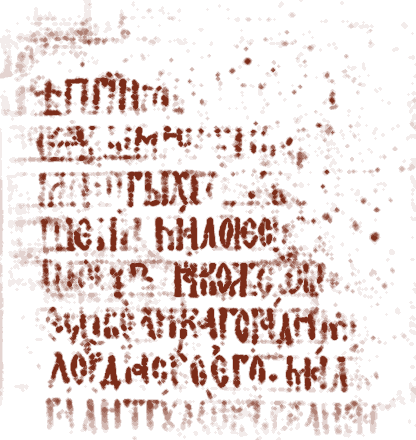
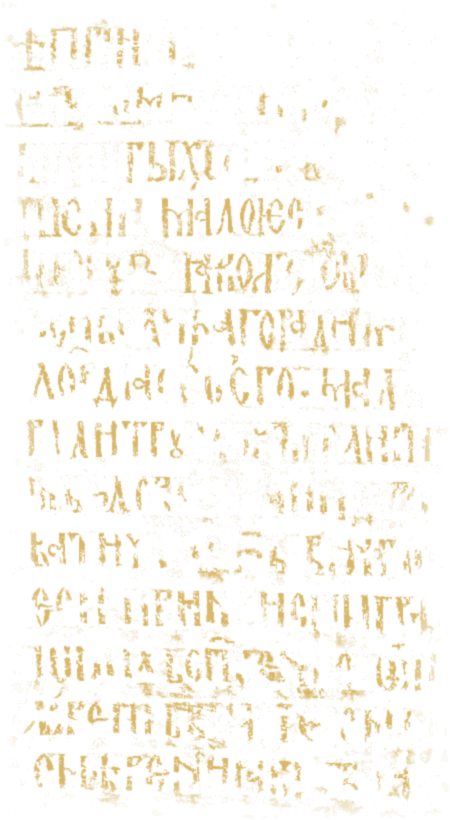
These words were written on the marble pillar at Kosovo
O man who treads the Serbian land, whether you be a newcomer or a native, whoever and whatever you may be, when you come to this field which is called Kosovo, all across it you shall behold a multitude of the bones of the dead, and together with them the nature of stone, me, marked with the cross and raised up; you shall see how I, plain, stand in the midst. Pass not by, and overlook me not, as something vain and fleeting, but I beseech you, come near and draw close to me, O beloved, and consider the words that I bring to you, and from them you shall understand for what reason, and how, and why I stand here, for I speak the truth to you, no less than one living; I shall tell you in substance all that came to pass.
Here once [was] a great autocrat, a wonder of the earth and rhiga of the Serbs, who was called Lazar, the great prince, an unshakable pillar of piety, an ocean of the knowledge of God and a depth of wisdom, a fiery mind and protector of strangers, feeder of the hungry and mercy to the poor, mercy and comforter of the sorrowful, who loved all that Christ wills, for with him of their own will was his countless multitude, as many as were under his hand. Good men, brave men, men indeed in word and in deed, shining like bright stars, like the earth strewn with flowers, clad in gold and adorned with precious stones, many chosen horses with golden saddles, and their horsemen all-wondrous and fair. As a good shepherd and leader of the all-noble and glorious, he wisely leads the spiritual lambs, that they may end well in Christ and [receive] the crown of suffering [and] become partakers of heavenly glory. Thus in concord a countless great multitude, together with their great and good lord, with valiant soul and most steadfast faith, as though to a fair palace and a fragrant feast, rushed upon the enemy and, trampling the serpent itself, slew the wild beast and the great adversary and the insatiable, all-devouring Hades, that is, Murad and his son, the offspring of the asp and the viper, the whelp of the lion and the basilisk, and with them not a few others. O, the judgments of the wonders of God: the brave sufferer was seized by lawless Hagarene hands, and he himself receives well the end of suffering, and the great Prince Lazar becomes a martyr of Christ. No other beheaded him, O beloved, but the very hand of that murderer, the son of Murad. And all that has been told was accomplished in the year 6897 (1389), in the twelfth indiction, on the fifteenth day of the month of June, on a Tuesday, and the hour was either the sixth or the seventh, I know not; God knows.
Translation into modern Serbian: Tomislav Jovanović, after: Tomislav Jovanović (ed.), A Reader in Medieval Literature. Vol. II. Serbian Literature (Хрестоматија средњовековне књижевности. Том II. Српска књижевност), edited and rendered into modern Serbian by Tomislav Jovanović, “Serbian Literature” Library, Old Serbian Literature series, book 1 (Belgrade: Faculty of Philology, 2012), 142.