
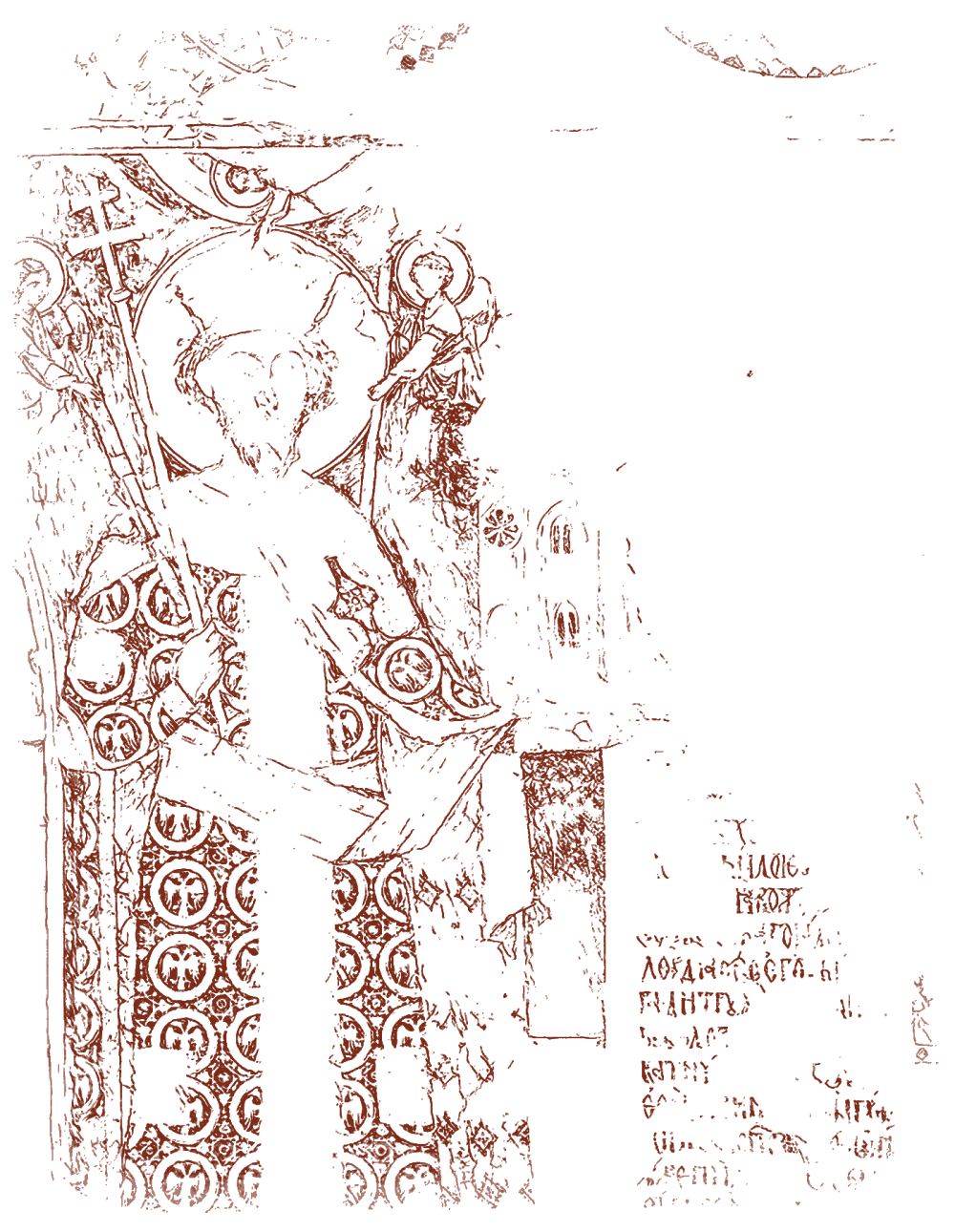


Constantine the Philosopher, the author of the Life of Saint Despot Stefan, at the conclusion of the text addresses the Despot in a manner befitting a canon of praise. In its conclusion, Constantine's work takes on a panegyrical liturgical tone, in the form of an ikos - as "Rejoice", with praises characteristic of prayerful addresses to the saints. Besides the Life, there are also other traces and testimonies of the cult of Saint Despot Stefan even before the official entry of his name into the diptychs of the Saints. Despot Stefan is called a saint in the text known under the title The Wisdom and Prophecy of Saint Stefan Lazarević. The Serbian monks Damjan and Pavle, in their address to the Roman Pope Clement VIII from 1597, listing the holy things and the saints of the Serbian lands, mention among others the holy body of Despot Stefan. According to L. Pavlović, the cult of Despot Stefan among the Serbian people existed from the 16th century. On the other hand, the research of S. N. Smirnov on the cults of Serbian saints in Russian manuscripts shows how the cult of Saint Despot Stefan was transmitted into the Russian milieu. Stefan's Life was entered into the collections of saints' lives compiled in Russia in the past, and was included even in Roman Catholic hagiographical collections.
Already during the lifetime of Despot Stefan Lazarević, after the Battle of Ankara (Angora), sometime between 1402 and 1405 (according to the opinion of Đorđe Trifunović and Danica Popović), the monk Jefrem wrote the Canon of Supplication for Despot Stefan Lazarević, in which, through petitions to the Lord to help in the struggle against enemies and foreign conquerors, the exceptional qualities of Despot Stefan Lazarević as the ideal ruler are brought out. However, although it contains such laudatory and panegyrical expressions for Despot Stefan and his rule, this canon (published in the Srbljak) had no direct hagiographical function.
But in the Life of Despot Stefan, which was written by Constantine the Philosopher soon after the Despot's repose, that is, probably as early as 1431, the perspective is considerably different. Already in the title of this Life it is underscored that it was written by the command and at the request of the Serbian Patriarch Nikon (1419–1435) and the court dignitaries, after an appearance of the Holy Despot, at the Despot's express demand [ŽDS 92]. Constantine the Philosopher begins this Life with the words "Bless, Father!", which may point to a monastic community as the addressee of this text, that is, indicate that the recipients of this Life belonged to a monastic milieu.
Having set out the historical facts, the author of the Life extols the virtues and piety of the Holy Despot, referring to him as pious throughout the whole text of the Life, and in the very conclusion calling him a second David, comparing him with the wondrous Solomon, with the Forefather Abraham and the Prophet Elijah, naming him a second Joseph, a successor of the mighty Samson, and a second Job [ŽDS 93].
Describing the catastrophes that befell the Serbian people after the Despot's repose (natural disasters and the conquering campaigns of the Ottomans and the Hungarians), Constantine in the Life also enumerates the unusual phenomena and apocalyptic signs in Belgrade that followed after the Serbian Despot fell asleep: